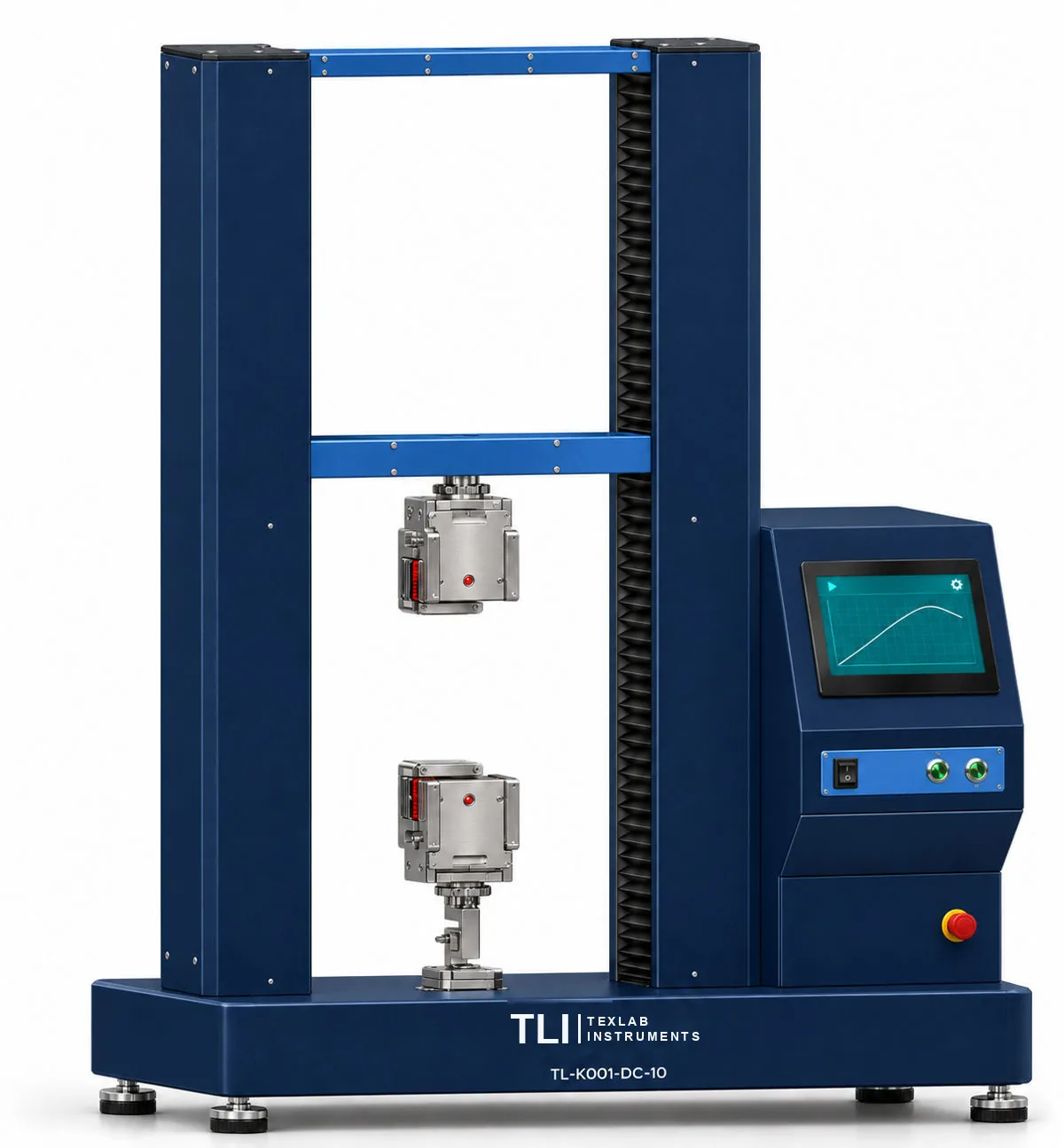
Photographs have been adapted for the website; dimensions may vary.
Dual-Column Universal Strength Tester (10 / 50 kN)
Çift Kolonlu Üniversal Mukavemet Test Cihazı (10 / 50 kN)
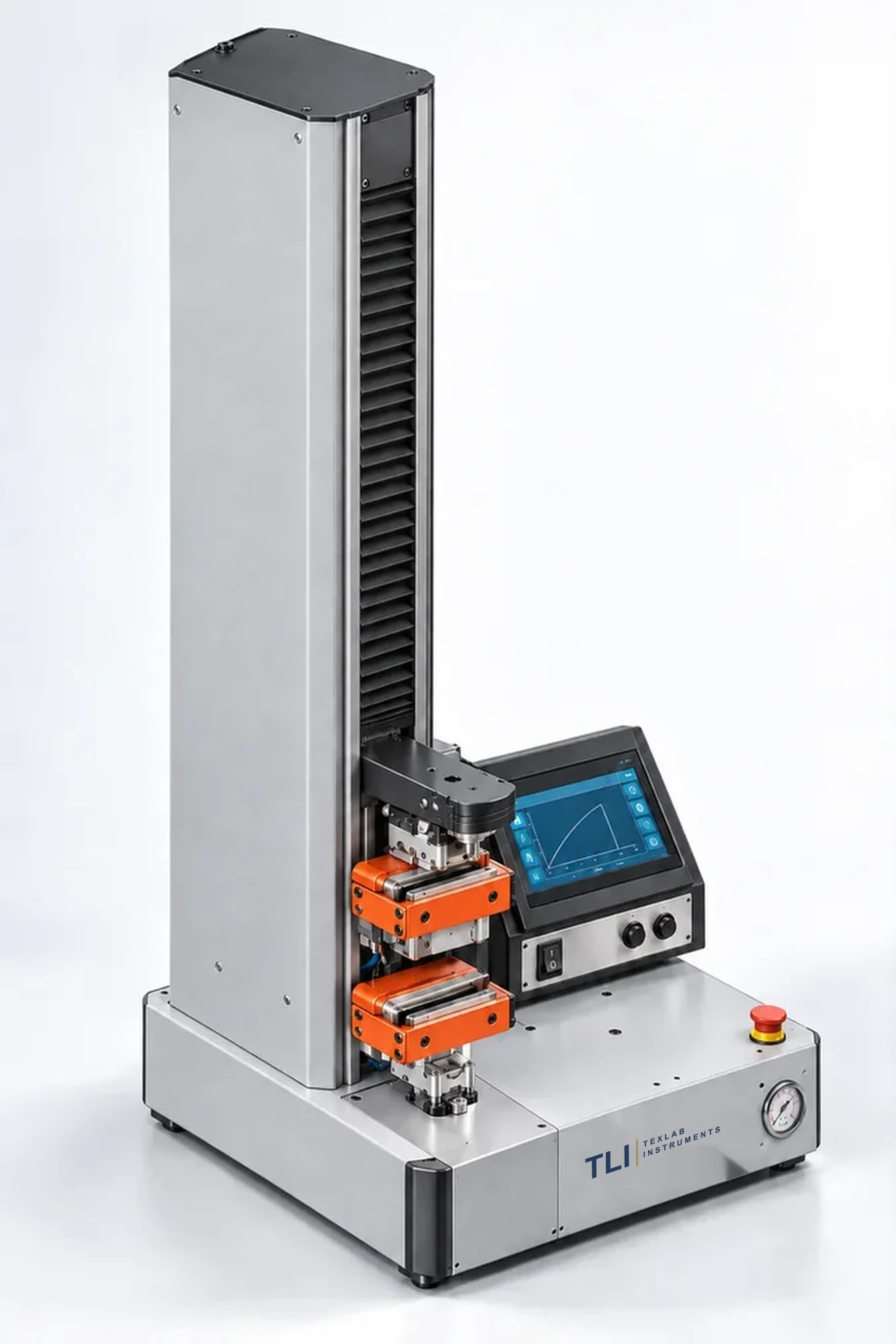
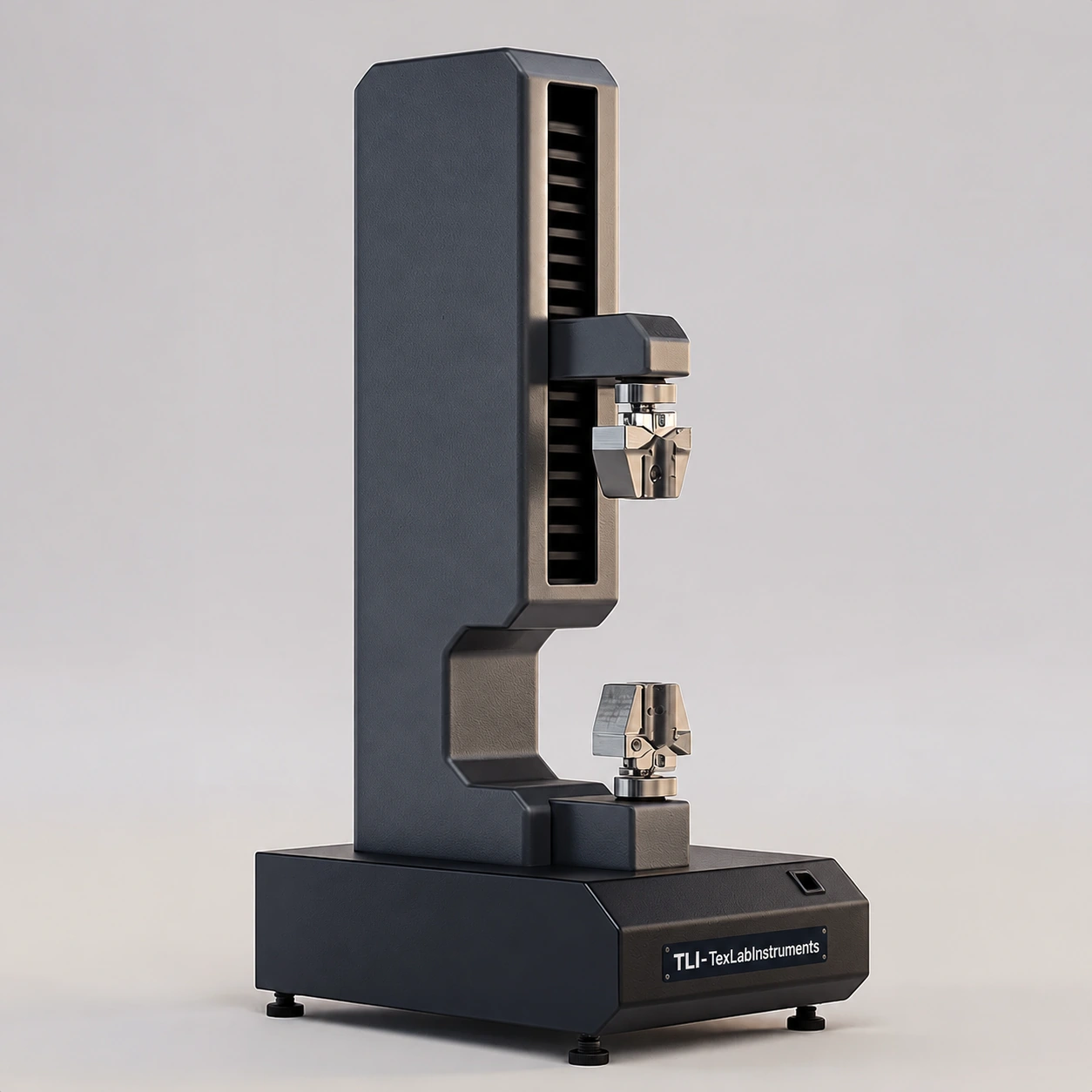
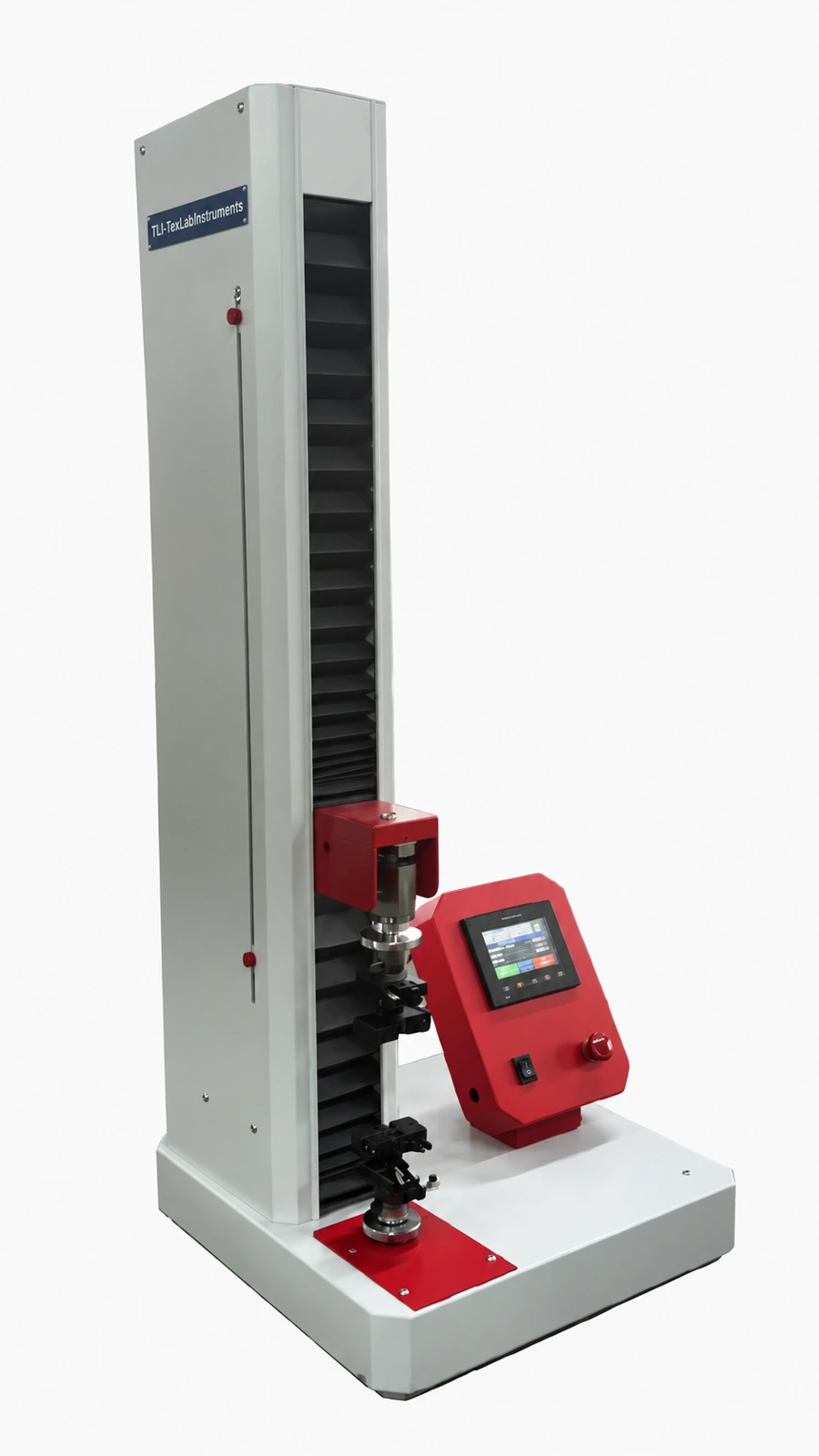
Dual-column universal strength tester for tensile, tear, seam slippage and carpet tuft-pull testing of fabrics, yarns, seams, carpets and technical textiles. Models TL-K001-DC-10 (10 kN) and TL-K001-DC-50 (50 kN); manual or pneumatic grips, instrument-mounted touchscreen, TensiLab PC software via Ethernet / Modbus TCP. Supply 220 V / 6 A; 4–8 bar air for pneumatic grips.
Model technical data
- Models: TL-K001-DC-10 (10 kN / 10,000 N) and TL-K001-DC-50 (50 kN / 50,000 N) nominal platform capacity.
- Frame: dual-column test platform; front-accessible test area.
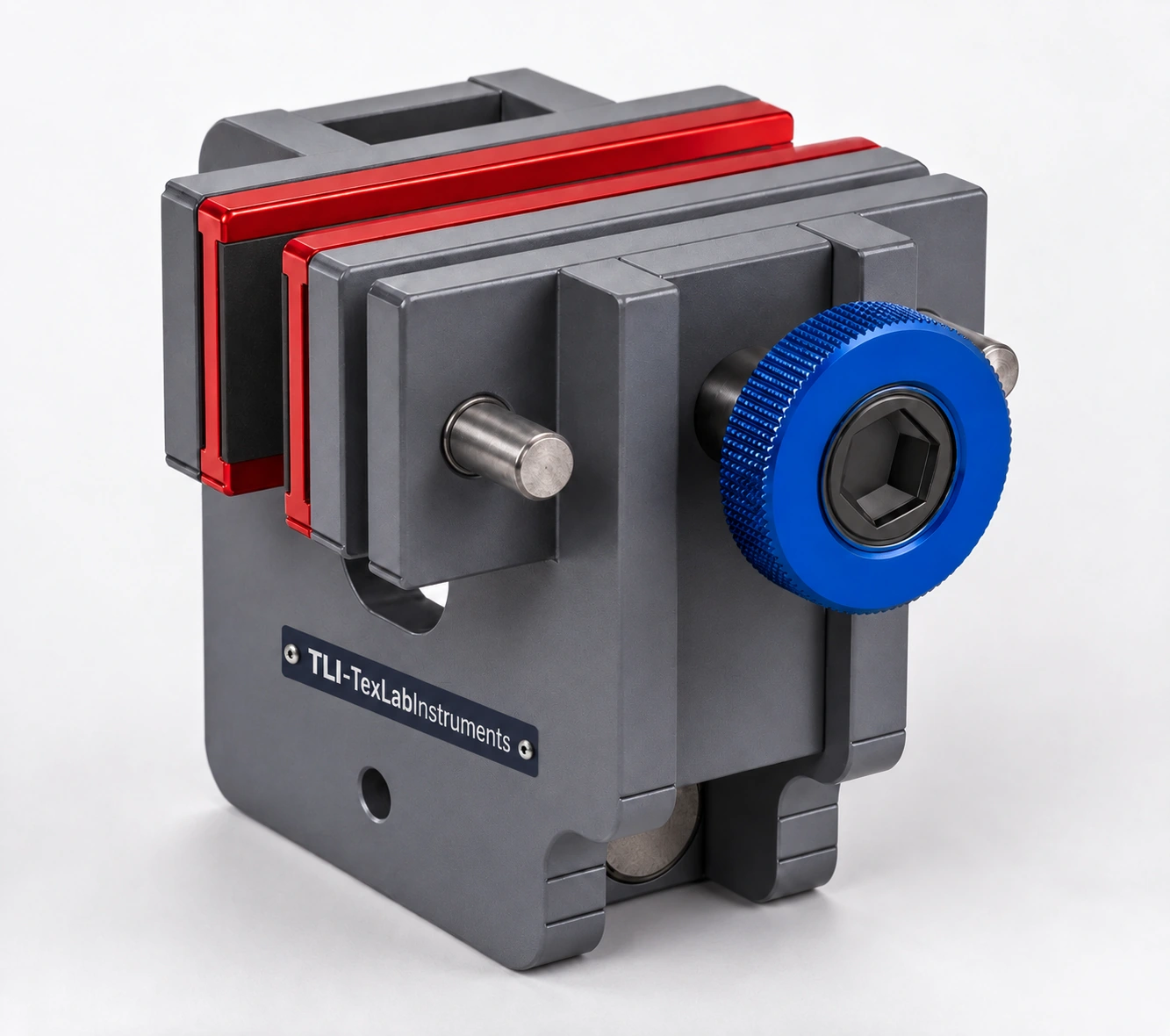
- Grip choice: manual (side handwheel, TL-A006) or pneumatic (TL-A007); interchangeable jaw faces TL-A001…TL-A005.
- Application fixtures: yarn grip TL-A008, loop-bar holder TL-A009, carpet pile/fringe pull fixture TL-A015, accessory holders TL-A010…TL-A014.
- Operator interface: instrument-mounted touchscreen; air pressure shown digitally on the HMI; accessible emergency stop on the body.
- Software: TensiLab; Windows 10/11 64-bit, Ethernet / Modbus TCP, minimum 1366 × 768 display; method management for 10 test types, six-language interface and reports, demo mode without an instrument.
- Statistics and reporting: mean, standard deviation, CV %, minimum, maximum, 95% confidence interval; A4 PDF, Excel and CSV; series transfer as a .tlab file.
- Calibration records: multi-point load cell and jaw-gap calibration; ISO 7500-1 verification reports.
- Usable test force depends on load cell, grip, connection and fixture capacities; platform capacity does not mean every accessory has the same rating.
Physical specifications and utilities
| Electrical supply | Electrical supply / current: 220 V / 6 A. |
|---|---|
| Power / connected load | Approx. 0.75–1.3 kW; upper bound from the 220 V / 6 A supply, for preliminary planning. |
| Overall instrument dimensions | Approx. 10 kN: 900 × 600 × 1900 mm; 50 kN: 1100 × 700 × 2100 mm (W × D × H). |
| Instrument weight | Approx. 10 kN: 150–250 kg; 50 kN: 300–450 kg net. |
| Gross / shipping weight | Approx. 200–550 kg gross; preliminary estimate by model and packing. |
| Compressed air | Compressed air 4–8 bar for pneumatic grips; air hose 8 mm. |
| Interfaces | PC connection: Ethernet / Modbus TCP; Windows 10/11 64-bit. |
| Lab requirements | 220 V / 6 A electrical supply; 4–8 bar air and an 8 mm hose for pneumatic grips; prepare the workspace and specimen-conditioning conditions. |
Dimension order and approximate values are stated in each row. Packaging data are separate from instrument dimensions and net mass. Approx. rows are preliminary engineering estimates based on comparable equipment and function/capacity; they are not verified manufacturing measurements or standard requirements. Installation and shipment are finalised against the approved drawing and nameplate. Estimate scope: base product / one unit; external computer, bench and auxiliary plant excluded.
Specifications, dimensions, and power requirements are approximate and subject to change without prior notice for continuous design improvements.
Product technical specifications and images may vary according to manufacturing conditions and applicable standards.
Test and configuration
- Measured output / function
- Breaking force (N), elongation (%)
- Parameters selected for the method
- Grip type, gauge length, test speed and load cell
- Verification points
- Force, displacement and speed verification
Listed methods are application references. Suitability is established by assessing the selected hardware, current method and calibration together.
Control and recording specification
The following are method-specific software/recording requirements; delivered software modules are defined by the order scope.
- Method code and edition, specimen ID, operator and selected test parameters are linked to the record.
- Force-extension curve; strain = 100 × (L-L₀)/L₀; crosshead and extensometer results are identified separately.
- Raw measurements, units, valid/invalid test flags and the reported result remain traceable.
- Calculations are checked against known inputs and an independent calculation; sensor channels are checked against calibration values.
Test standards
- ISO 13934-1 Textiles — Tensile properties of fabrics — Part 1: Determination of maximum force and elongation at maximum force using the strip method
- ISO 13934-2 Textiles — Tensile properties of fabrics — Part 2: Determination of maximum force using the grab method
- ASTM D5035 Standard Test Method for Breaking Force and Elongation of Textile Fabrics (Strip Method)
- ASTM D5034 Standard Test Method for Breaking Strength and Elongation of Textile Fabrics (Grab Test)
- ISO 13937-2 Textiles — Tear properties of fabrics — Part 2: Determination of tear force of trouser-shaped test specimens (Single tear method)
- ISO 13937-3 Textiles — Tear properties of fabrics — Part 3: Determination of tear force of wing-shaped test specimens (Single tear method)
- ISO 13937-4 Textiles — Tear properties of fabrics — Part 4: Determination of tear force of tongue-shaped test specimens (Double tear test)
- ASTM D2261 Standard Test Method for Tearing Strength of Fabrics by the Tongue (Single Rip) Procedure (Constant-Rate-of-Extension Tensile Testing Machine)
- ASTM D5587 Standard Test Method for Tearing Strength of Fabrics by Trapezoid Procedure
- ISO 2062 Textiles — Yarns from packages — Determination of single-end breaking force and elongation at break using constant rate of extension (CRE) tester
- ASTM D2256 Standard Test Method for Tensile Properties of Yarns by the Single-Strand Method
- ISO 6939
- ASTM D1578
- ISO 13935-1 Textiles — Seam tensile properties of fabrics and made-up textile articles — Part 1: Determination of maximum force to seam rupture using the strip method
- ISO 13935-2 Textiles — Seam tensile properties of fabrics and made-up textile articles — Part 2: Determination of maximum force to seam rupture using the grab method
- ISO 13936-1 Textiles — Determination of the slippage resistance of yarns at a seam in woven fabrics — Part 1: Fixed seam opening method
- ISO 13936-2
- ISO 20932-1
- ISO 4919 Carpets — Determination of tuft withdrawal force
- ASTM D1335 Standard Test Method for Tuft Bind of Pile Yarn Floor Coverings
- ISO 11857
- ASTM D3936
Prices start from €18. Request the technical specification and a quotation for this instrument.
Request a quoteCall usPDF catalogue