Photographs have been adapted for the website; dimensions may vary.
Grip Systems for Universal Tensile Testers
Universal Mukavemet Test Cihazı Çene Sistemleri
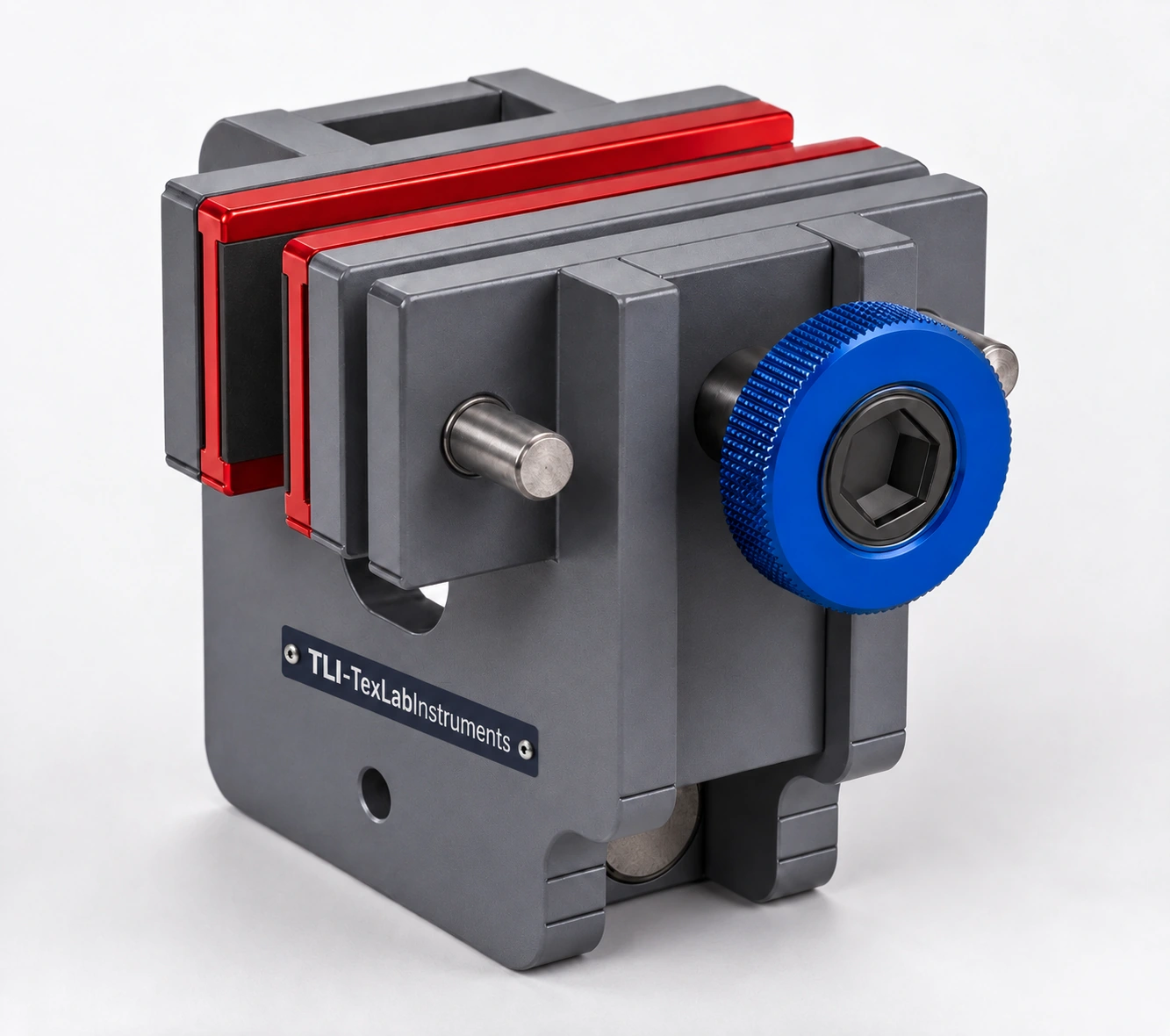
Pneumatic and manual fabric grips with interchangeable jaw faces for textile specimens: 35 × 105 / 155 / 200 mm flat rubber and grooved aluminium faces, inclined rubber faces for trapezoid tear, 25 × 25 mm grab face, 82 and 125 mm loop bar sets and manual yarn grip. ISO 13934-1/-2, ISO 13935-1/-2, ISO 9073-3/-4/-18, ASTM D5034/D5035/D5587, EN 14704-1, ISO 2062.
Model technical data
- Pneumatic fabric grip (UMT-PG-SET) and manual fabric grip (UMT-MG-SET): 2 grips / set, supplied with 35 × 105 mm flat rubber faces (4 pcs).
- Flat rubber and grooved aluminium faces: 35 × 105, 35 × 155, 35 × 200 mm (4 pcs / set); ISO 13934-1, ISO 13935-1, ISO 9073-3, ASTM D5035.
- Inclined rubber faces (35–72.5 × 105 mm) for trapezoid tear: ISO 9073-4, ASTM D5587.
- 25 × 25 mm grab face: ISO 13934-2, ISO 13935-2, ISO 9073-18, ASTM D5034.
- 82 and 125 mm loop bar sets (Ø8 mm, max. 200 N): EN 14704-1 Method B, ASTM D4964, BS 4952.
- Manual yarn grip (Ø11 mm max.): brass guide roller, V-groove; ISO 2062, ASTM D2256.
Physical specifications and utilities
| Electrical supply | Manual / passive base apparatus; no mains supply assumed. |
|---|---|
| Power / connected load | Approx. 0 W connected load for preliminary planning. |
| Overall instrument dimensions | Approx. 200 × 150 × 300 mm (W × D × H). |
| Instrument weight | Approx. 2–15 kg net. |
| Gross / shipping weight | Approx. 12.2–28.8 kg gross; estimated packing allowance. |
| Lab requirements | Compressed air for pneumatic grip option; grip interface and safety clearance depend on the host machine. |
Dimension order and approximate values are stated in each row. Packaging data are separate from instrument dimensions and net mass. Approx. rows are preliminary engineering estimates based on comparable equipment and function/capacity; they are not verified manufacturing measurements or standard requirements. Installation and shipment are finalised against the approved drawing and nameplate. Estimate scope: one grip / grip set; host tensile machine excluded.
Specifications, dimensions, and power requirements are approximate and subject to change without prior notice for continuous design improvements.
Product technical specifications and images may vary according to manufacturing conditions and applicable standards.
Test and configuration
- Measured output / function
- Breaking force (N), elongation (%)
- Parameters selected for the method
- Grip type, gauge length, test speed and load cell
- Verification points
- Force, displacement and speed verification
Listed methods are application references. Suitability is established by assessing the selected hardware, current method and calibration together.
Test parameters for the reviewed method
Values belong to the stated source edition. Test recipe, fixture and delivered instrument configuration are selected together.
ISO 13934-1:2013 · 6.1.3-6.1.5 / 8.2
- Force error: no greater than ±1% in the working range; jaw-separation error: no greater than ±1 mm.
- CRE rates: 20 and 100 mm/min, ±10%; gauge lengths: 100 and 200 mm, ±1 mm.
- Preferred strip specimen width: 50 ± 0.5 mm; other widths require agreement and reporting.
EN ISO 13934-2:1999 / TS EN ISO 13934-2:2002 · 6.1.3-6.1.6
- Grab test: speed 50 mm/min ±10%; gauge length 100 ± 1 mm or 75 ± 1 mm by agreement; effective gripping area (25 ± 1) × (25 ± 1) mm. Force error no greater than ±1% in the range used.
ISO 13935-1:2014 · 6.1, 9.1-9.2
- Seam strip test: gauge length 200 ± 1 mm; speed 100 mm/min ±10%; force error no greater than ±1%. Jaws must not be narrower than the specimen and should preferably be at least 60 mm wide.
ISO 13935-2:2014 · 6.1, 9.1-9.2
- Seam grab test: gauge length 100 ± 1 mm; speed 50 mm/min ±10%; gripping area (25 ± 1) × (25 ± 1) mm; force error no greater than ±1%.
ASTM D5034-95 · 6.1, 10.1.2
- Grab-test initial jaw spacing 75 ± 1 mm. Record 300 ± 10 mm/min fixed speed and 20 ± 3 s time-to-break as separate options; these differ from the 50 mm/min ISO 13934-2 recipe.
ASTM D5035-95 (2003) · 6.1-6.2.1
- Strip method uses 300 ± 10 mm/min or a selected constant time-to-break of 20 ± 3 s. Jaw face at least 10 mm wider than the specimen and at least 25 mm long in the force direction.
EN 14704-1:2005 / TS EN 14704-1:2006 · 6.1
- Elasticity CRE arrangement accommodates 20-500 mm/min within ±10% and gauge lengths 100-250 mm within ±1 mm. Force and jaw-separation error limits 1% and 1 mm respectively; record cycling between load or extension limits.
ASTM D5587-03 · 6.1–6.2, 8.2–8.3
- For trapezoid tearing use CRE, initial jaw separation 25 ±1 mm and speed 300 ±10 mm/min. Gripping faces are at least 50 by 75 mm, long side perpendicular to force. Distinguish the 100 mm/min ISO nonwoven trapezoid setting.
TS EN ISO 9073-4:2002 / EN ISO 9073-4:1997 · 4, 6.1–6.2, 7.2
- For nonwoven trapezoid tearing use specimens 75 ±1 by 150 ±2 mm, five per direction. Initial jaw separation is 25 ±1 mm, speed 100 mm/min, with break at 10–90% full scale. This setting differs from ASTM D5587 speed.
ISO 9073-3:1989 / TS EN 29073-3:1996 · 5-9
- Nonwoven strip tensile method: CRE machine, strip 50 ± 0.5 mm, gauge length 200 ± 1 mm and speed 100 mm/min; five specimens per direction. Record breaking force and elongation together; assess jaw breaks separately. Equivalence to a later edition is not assumed.
Control and recording specification
The following are method-specific software/recording requirements; delivered software modules are defined by the order scope.
- Method code and edition, specimen ID, operator and selected test parameters are linked to the record.
- Force-extension curve; strain = 100 × (L-L₀)/L₀; crosshead and extensometer results are identified separately.
- Raw measurements, units, valid/invalid test flags and the reported result remain traceable.
- Calculations are checked against known inputs and an independent calculation; sensor channels are checked against calibration values.
Historical method references (current method and fixture require separate review): EN 14704-1
Download the technical brochure (PDF)Revision: 28 October 2026Test standards
- ISO 13934-1 Textiles — Tensile properties of fabrics — Part 1: Determination of maximum force and elongation at maximum force using the strip method
- ISO 13934-2 Textiles — Tensile properties of fabrics — Part 2: Determination of maximum force using the grab method
- ISO 13935-1 Textiles — Seam tensile properties of fabrics and made-up textile articles — Part 1: Determination of maximum force to seam rupture using the strip method
- ISO 13935-2 Textiles — Seam tensile properties of fabrics and made-up textile articles — Part 2: Determination of maximum force to seam rupture using the grab method
- ISO 9073-3 Nonwovens — Test methods — Part 3: Determination of tensile strength and elongation at break using the strip method
- ISO 9073-4 Nonwovens — Test methods — Part 4: Determination of tear resistance by the trapezoid procedure
- ASTM D5034 Standard Test Method for Breaking Strength and Elongation of Textile Fabrics (Grab Test)
- ASTM D5035 Standard Test Method for Breaking Force and Elongation of Textile Fabrics (Strip Method)
- ASTM D5587 Standard Test Method for Tearing Strength of Fabrics by Trapezoid Procedure
- EN 14704-1 Determination of the elasticity of fabrics - Part 1: Strip tests
- ISO 2062 Textiles — Yarns from packages — Determination of single-end breaking force and elongation at break using constant rate of extension (CRE) tester
- BS 4294 Methods of test for the stretch and recovery properties of fabrics
Prices start from €18. Request the technical specification and a quotation for this instrument.
Request a quoteCall usPDF catalogueMore in this category
Universal Testing Machine (5 kN)
Strength Testing Machine (300 N)
Strength Testing Machine (3 kN)
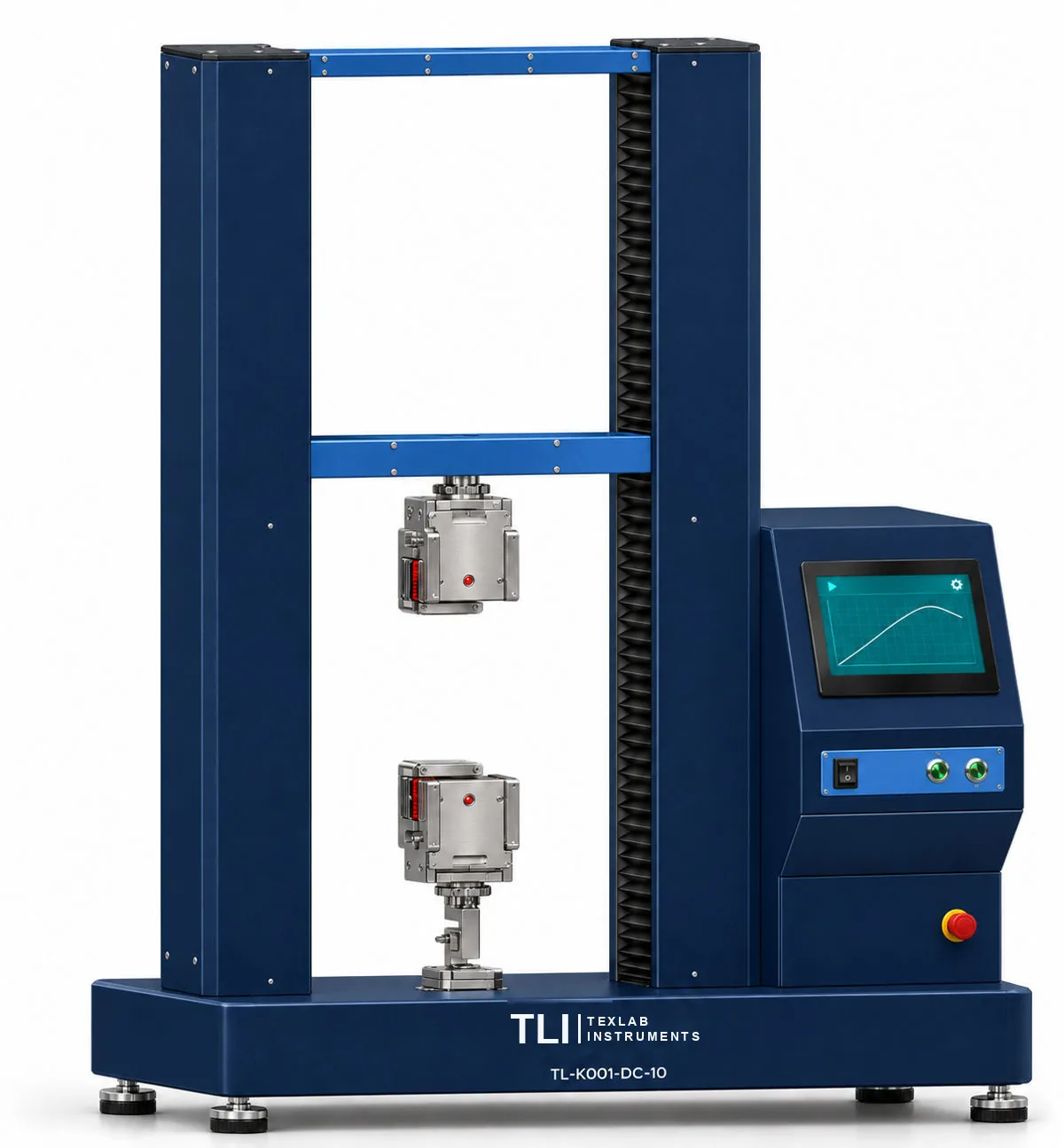
Dual-Column Universal Strength Tester (10 / 50 kN)
Articles about this instrument
Other instruments in this group
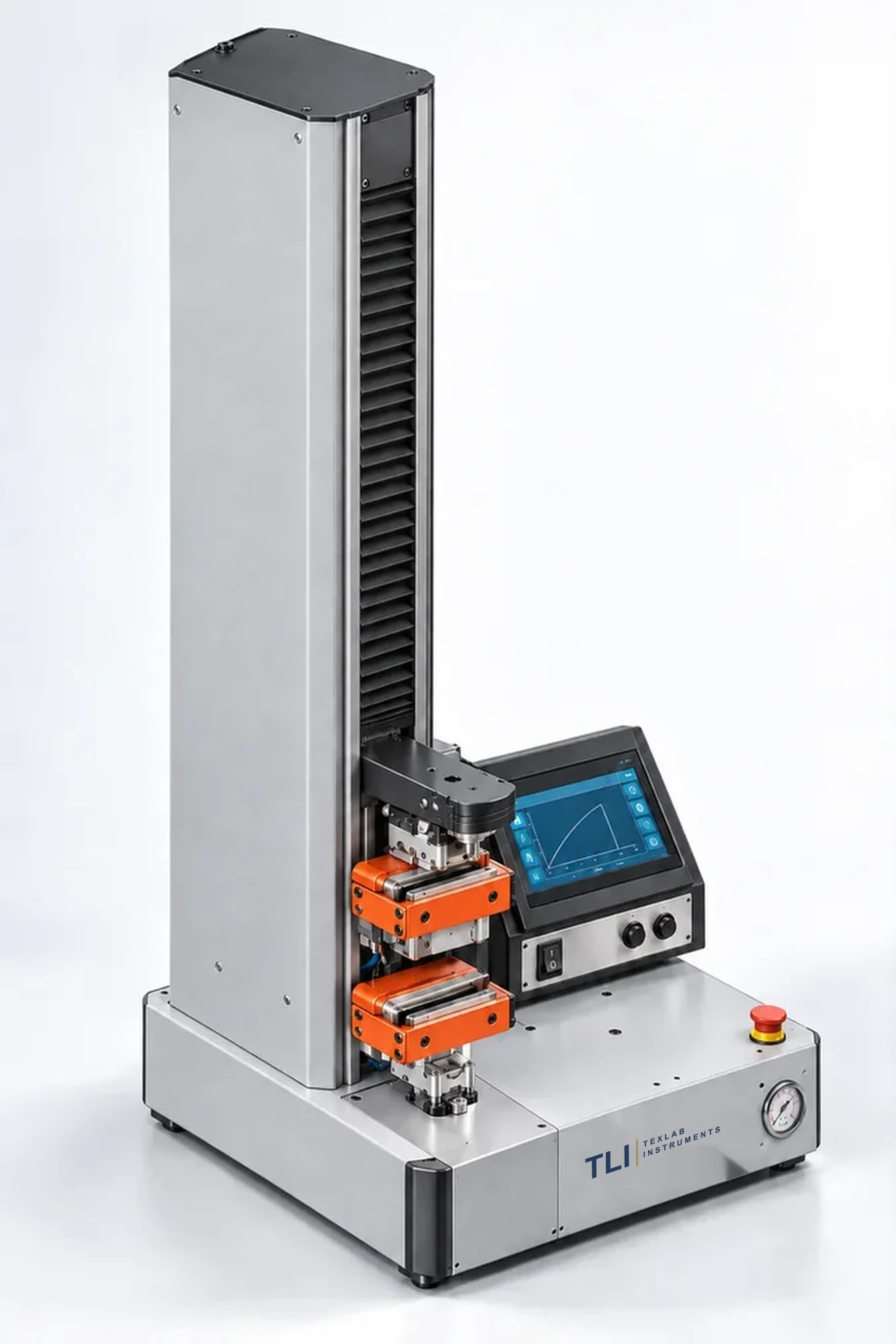
- TXL-UNI-001Universal Testing Machine (5 kN)
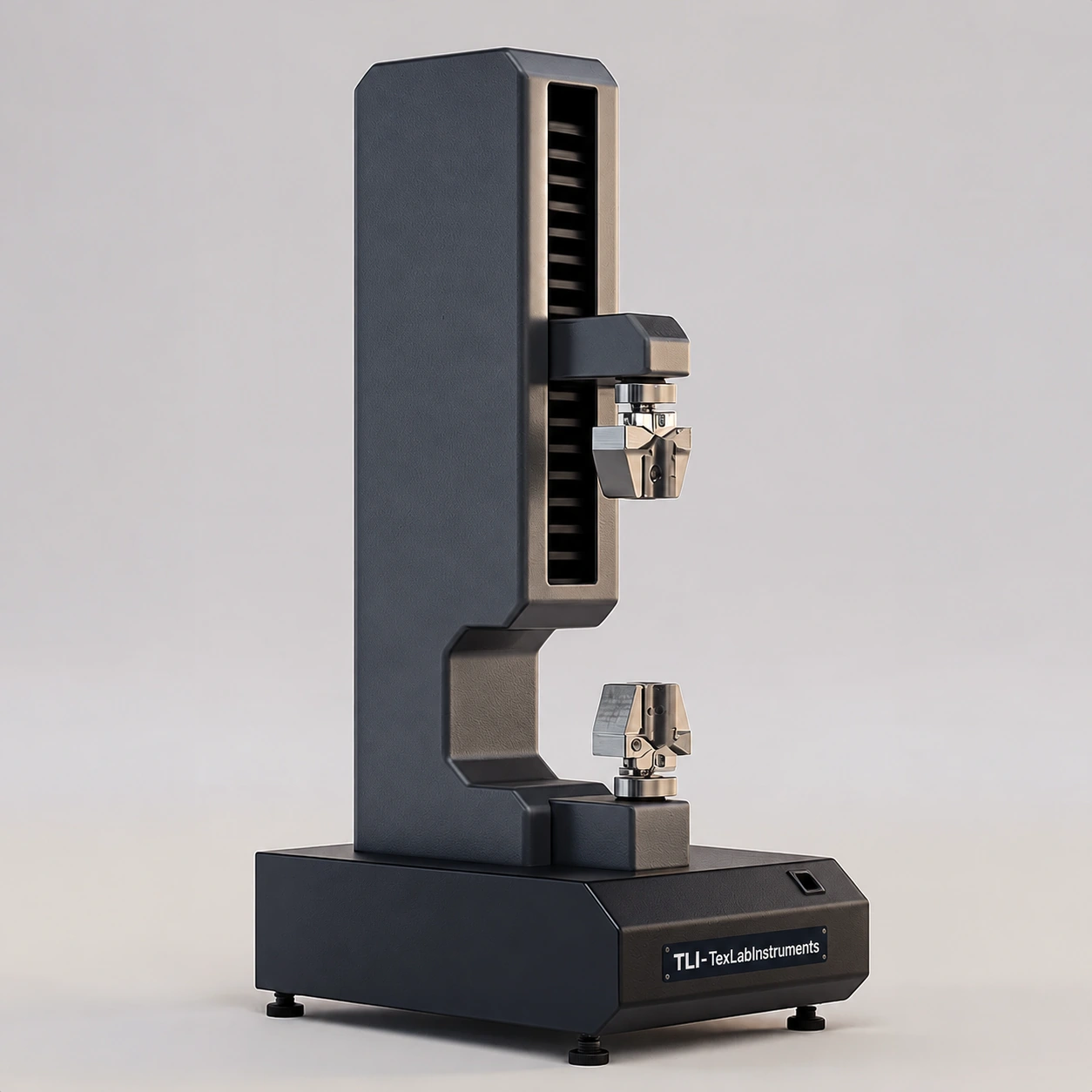
- TXL-UNI-004Strength Testing Machine (300 N)
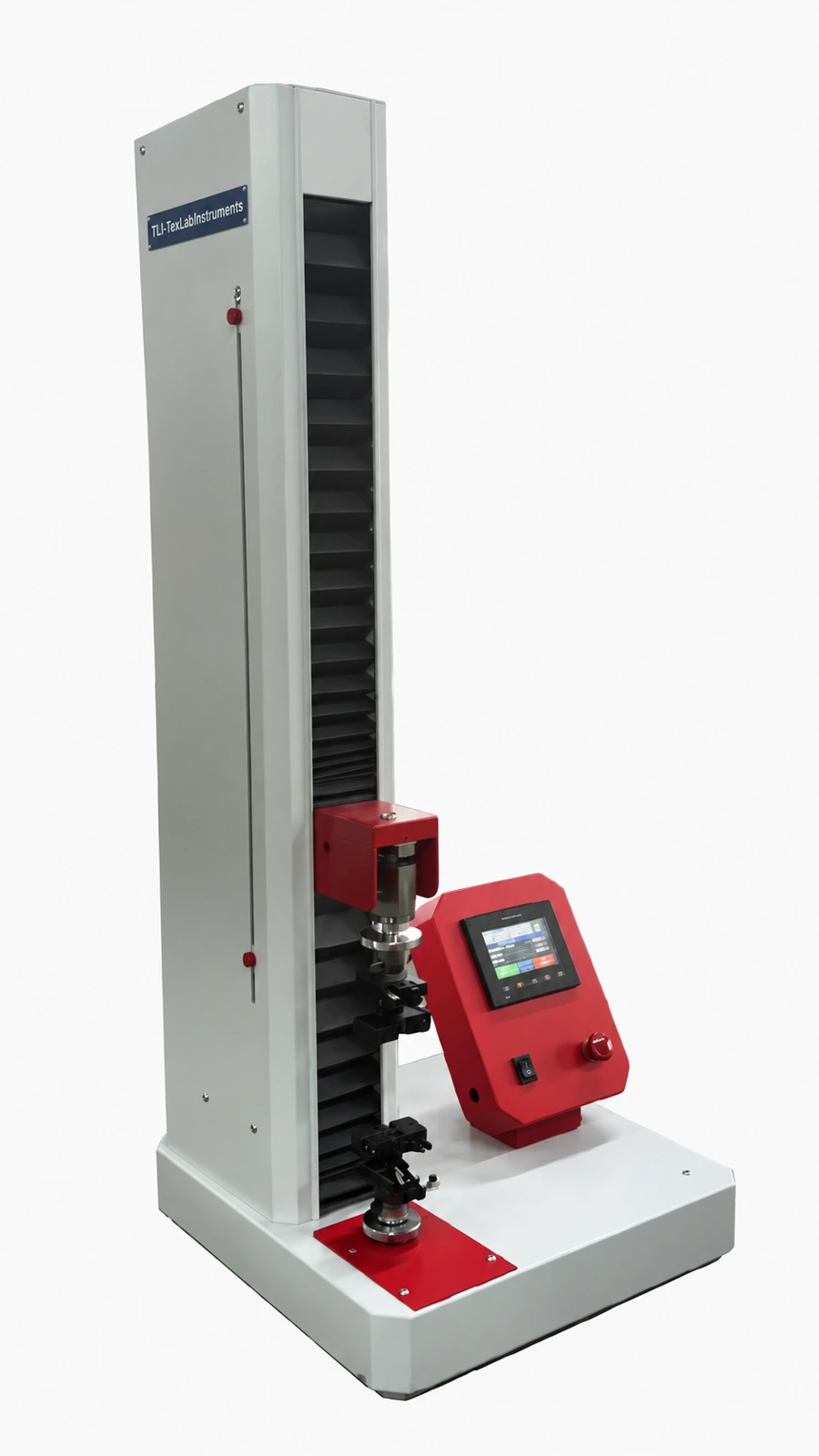
- TXL-UNI-005Strength Testing Machine (3 kN)
- TXL-UNI-007Dual-Column Universal Strength Tester (10 / 50 kN)
- TXL-UNI-008Box Compression Tester (BCT, 10 / 20 / 50 kN)