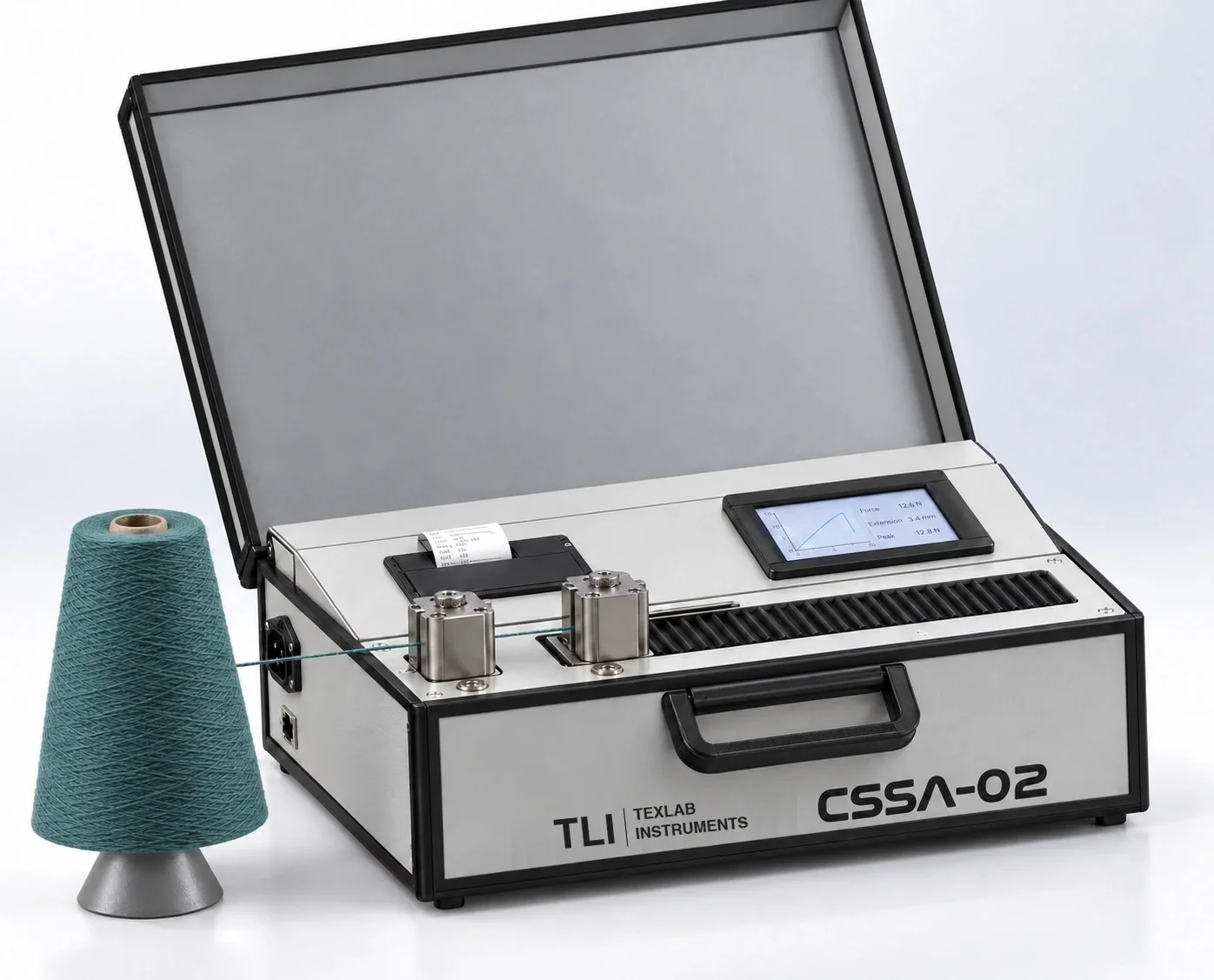
Photographs have been adapted for the website; dimensions may vary.
Yarn & Splice Strength Tester (CSSA-02, Portable)
İplik ve Splice Mukavemet Test Cihazı (CSSA-02, Taşınabilir)
Measures breaking force and elongation of parent yarns and spliced joints by the constant rate of extension (CRE) principle and compares splice performance with the reference yarn. Case-type housing for use beside the winding machine. Automatic electromagnetic grips, adjustable automatic pretension, 4.3-inch touchscreen HMI, integrated thermal printer and PC software over Ethernet.
Model technical data
- Force capacity: 60 N / 6,000 cN.
- Initial gauge length: 250 mm.
- Usable extension travel: 110 mm.
- Maximum elongation: 44% at 250 mm gauge length.
- Crosshead speed: adjustable up to 1,000 mm/min.
- Grips: automatically closing electromagnetic grips; adjustable automatic pretension.
- Display: 4.3-inch touchscreen HMI; Ethernet port.
- Printer: integrated mini thermal printer, RS-232 interface.
- Results: breaking force, elongation, RKM, splice strength ratio; minimum, maximum, mean and CV%.
- PC software: force-extension curve, archive, PDF reports with graphs and CSV export.
Physical specifications and utilities
| Electrical supply | Approx. low-voltage adapter with 100–240 V AC, 50/60 Hz input; output voltage is build-dependent. |
|---|---|
| Power / connected load | Approx. 20–80 W connected load for preliminary planning. |
| Overall instrument dimensions | Approx. 450 × 300 × 350 mm (W × D × H). |
| Instrument weight | Approx. 5–12 kg net. |
| Gross / shipping weight | Approx. 15.5–25 kg gross; estimated packing allowance. |
| Interfaces | Display: 4.3-inch touchscreen HMI; Ethernet port. Printer: integrated mini thermal printer, RS-232 interface. |
| Lab requirements | Level, stable working surface; specimen conditioning follows the selected method. |
Dimension order and approximate values are stated in each row. Packaging data are separate from instrument dimensions and net mass. Approx. rows are preliminary engineering estimates based on comparable equipment and function/capacity; they are not verified manufacturing measurements or standard requirements. Installation and shipment are finalised against the approved drawing and nameplate. Estimate scope: base product / one unit; external computer, bench and auxiliary plant excluded.
Specifications, dimensions, and power requirements are approximate and subject to change without prior notice for continuous design improvements.
Product technical specifications and images may vary according to manufacturing conditions and applicable standards.
Test and configuration
- Measured output / function
- Yarn breaking force, elongation and splice strength
- Parameters selected for the method
- Grips, gauge length, pretension and test speed
- Verification points
- Force, elongation, speed and jaw slip
Listed methods are application references. Suitability is established by assessing the selected hardware, current method and calibration together.
Test parameters for the reviewed method
Values belong to the stated source edition. Test recipe, fixture and delivered instrument configuration are selected together.
ISO 2062:2009 · 5.1 / 8.1.2 / 8.1.4
- Gauge length: 500 ± 2 mm or 250 ± 1 mm.
- Normal CRE rates: 500 ± 10 or 250 ± 5 mm/min, matched to the selected gauge length.
- Shorter gauge lengths or alternative automatic-test speeds are used and recorded under the conditions stated in the method.
ASTM D2256-97 · 5.9.2, 9.2-9.3
- Yarn tensile recipe: gauge length 250 ± 3 mm or 500 ± 5 mm by agreement. Keep the 20 ± 3 s average time-to-break option separate from the 300 ± 10 mm/min fixed-speed option at 250 mm gauge; report straight, knot or loop configuration.
Control and recording specification
The following are method-specific software/recording requirements; delivered software modules are defined by the order scope.
- Method code and edition, specimen ID, operator and selected test parameters are linked to the record.
- Breaking force and elongation; linear density and its unit are recorded when calculating tenacity.
- Raw measurements, units, valid/invalid test flags and the reported result remain traceable.
- Calculations are checked against known inputs and an independent calculation; sensor channels are checked against calibration values.
Test standards
- ISO 2062 Textiles — Yarns from packages — Determination of single-end breaking force and elongation at break using constant rate of extension (CRE) tester
- ASTM D2256 Standard Test Method for Tensile Properties of Yarns by the Single-Strand Method
- GB/T 14344 Man-made fibre — Test method for tensile properties of filament yarns
- GB/T 3916 Textiles — Yarns from packages — Determination of single-end breaking force and elongation at break using constant rate of extension (CRE) tester
Prices start from €18. Request the technical specification and a quotation for this instrument.
Request a quoteCall usPDF catalogueMore in this category
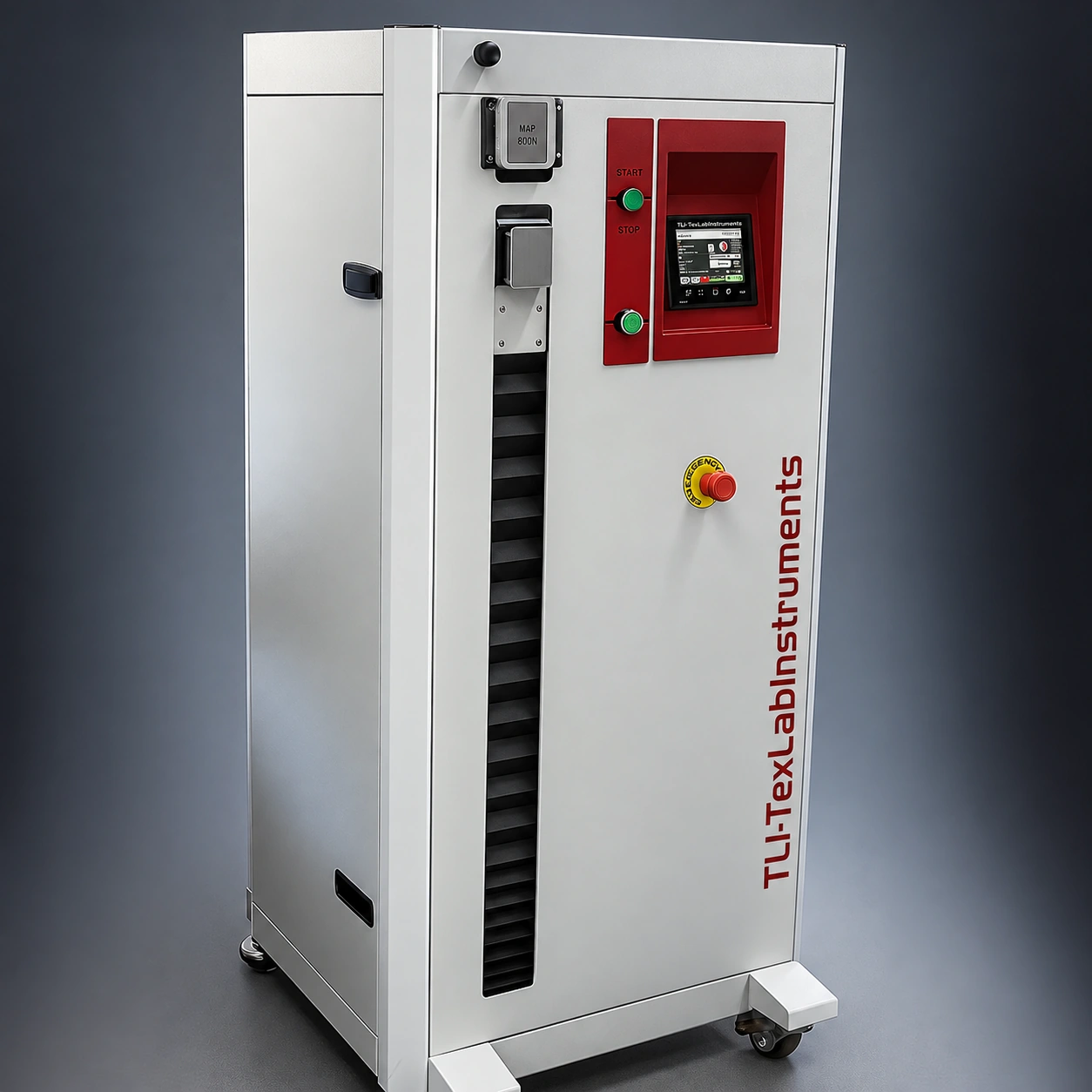
Single Yarn Tensile Tester
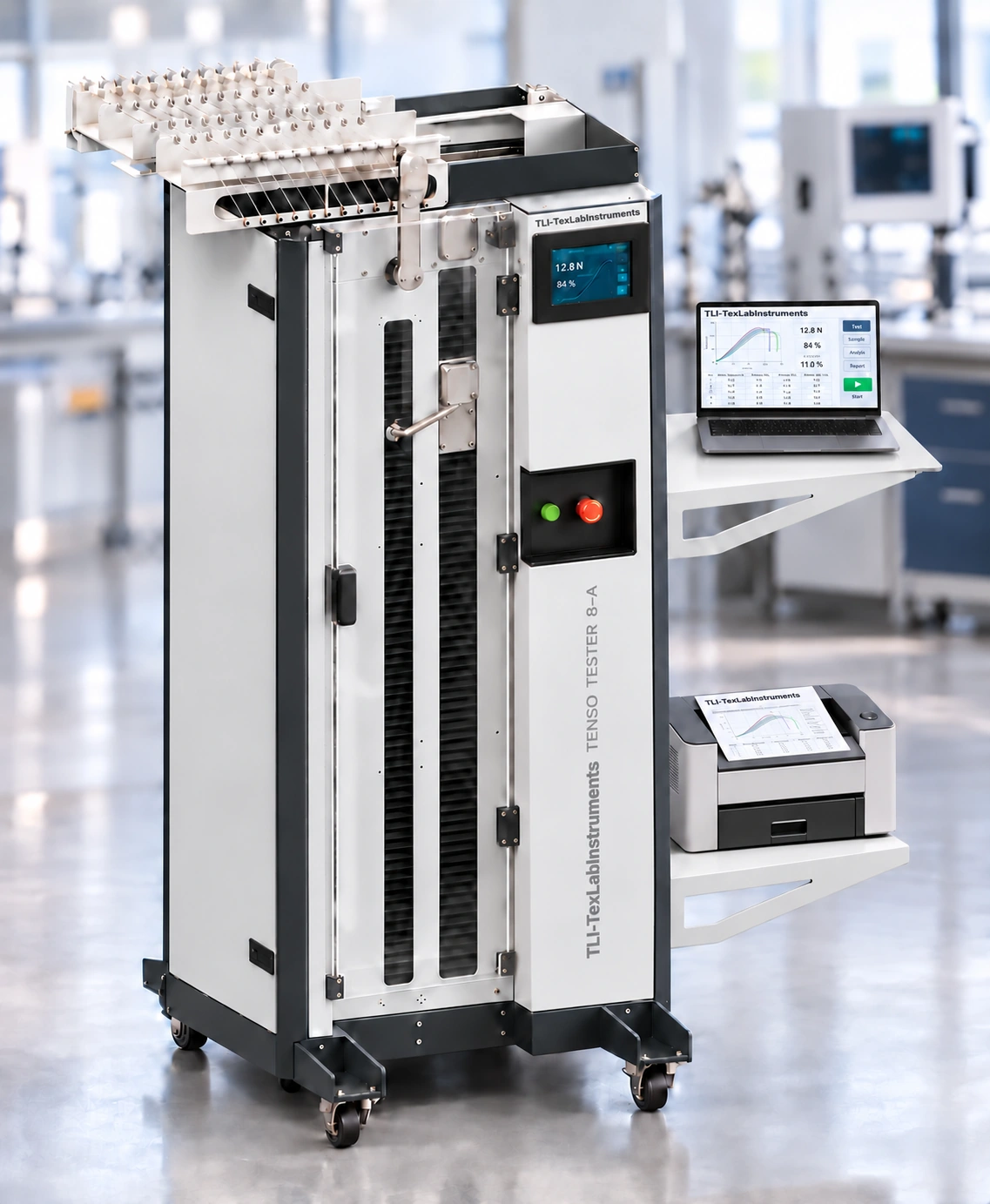
Auto-Feed Yarn Tensile Tester
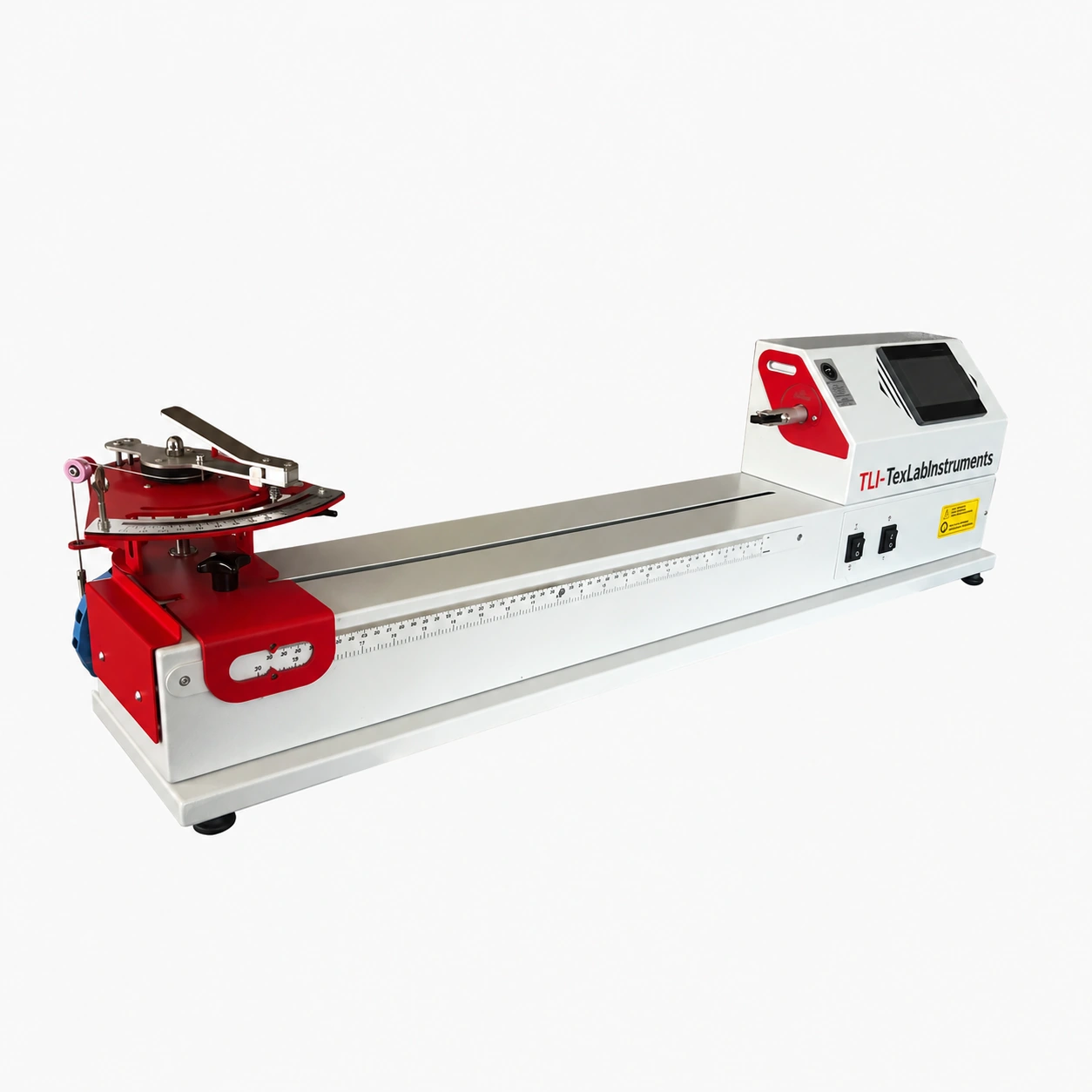
Yarn Twist Tester
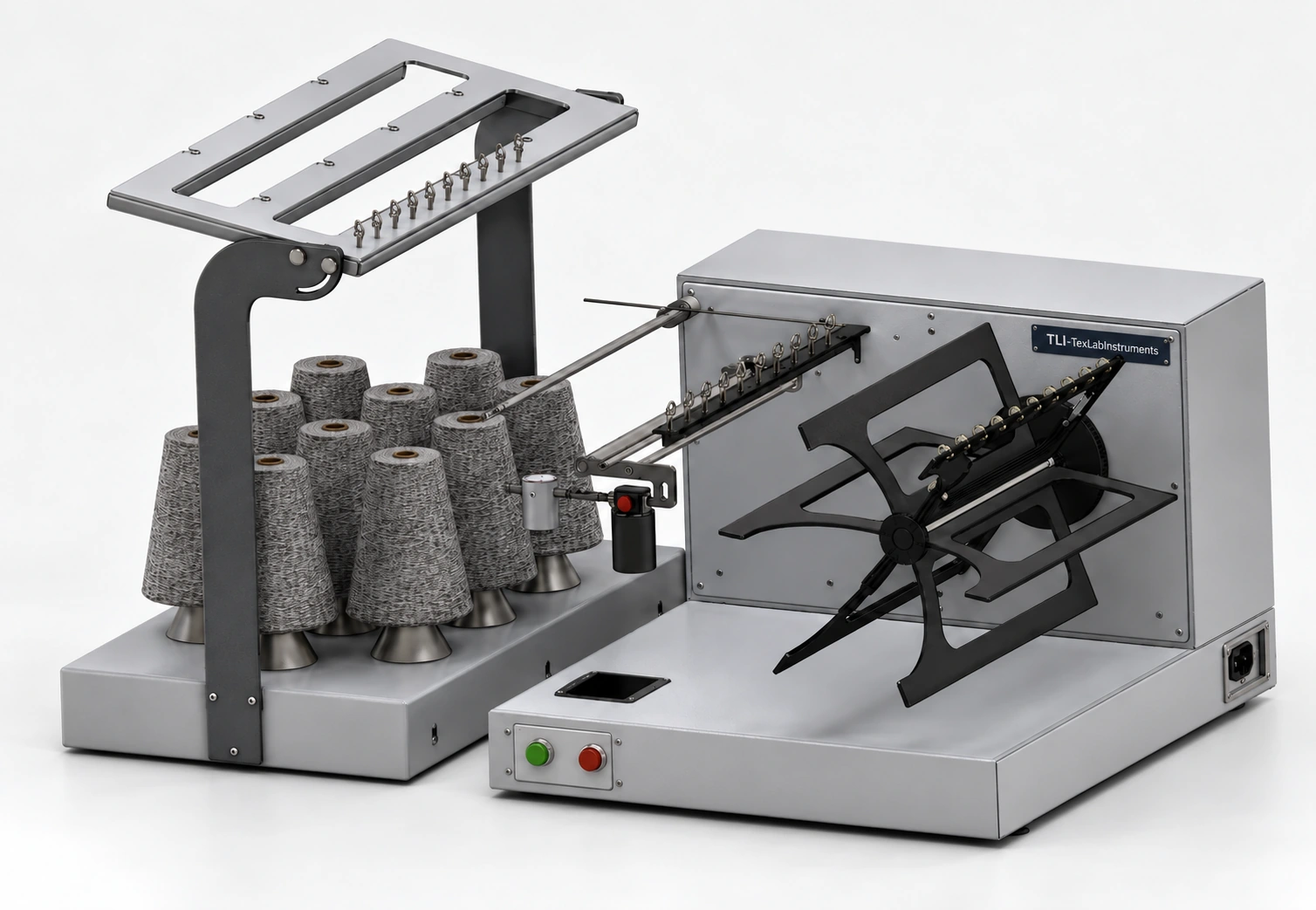
Yarn Reel Winder (Automatic)
Articles about this instrument
Other instruments in this group
- TXL-IPL-001Single Yarn Tensile Tester
- TXL-IPL-002Auto-Feed Yarn Tensile Tester
- TXL-IPL-007Crimp Stability / Shrinkage Tester
- TXL-IPL-008Yarn Friction Coefficient Tester
- TXL-IPL-009Digital Yarn Count Balance
- TXL-IPL-011Yarn Sample Card Winder
- TXL-IPL-012Yarn Inspection Board & Wrap Reel
- TXL-IPL-013Yarn Crimp & Length Tester (TL-YCM-1200)
- TXL-IPL-015Interlace (Punto) Tester (TL-IMG-01)
- TXL-IPL-016Interlace Count & Stability Tester (TL-IMG-02)
- TXL-IPL-017Yarn Plying and Twisting Tester (I009-K)
- TXL-IPL-018Optical Yarn Evenness and Hairiness Tester (OPT01)