Photographs have been adapted for the website; dimensions may vary.
Wyzenbeek Abrasion Tester (WY-4, 4 Stations)
Wyzenbeek Aşınma Test Cihazı (WY-4, 4 İstasyonlu)
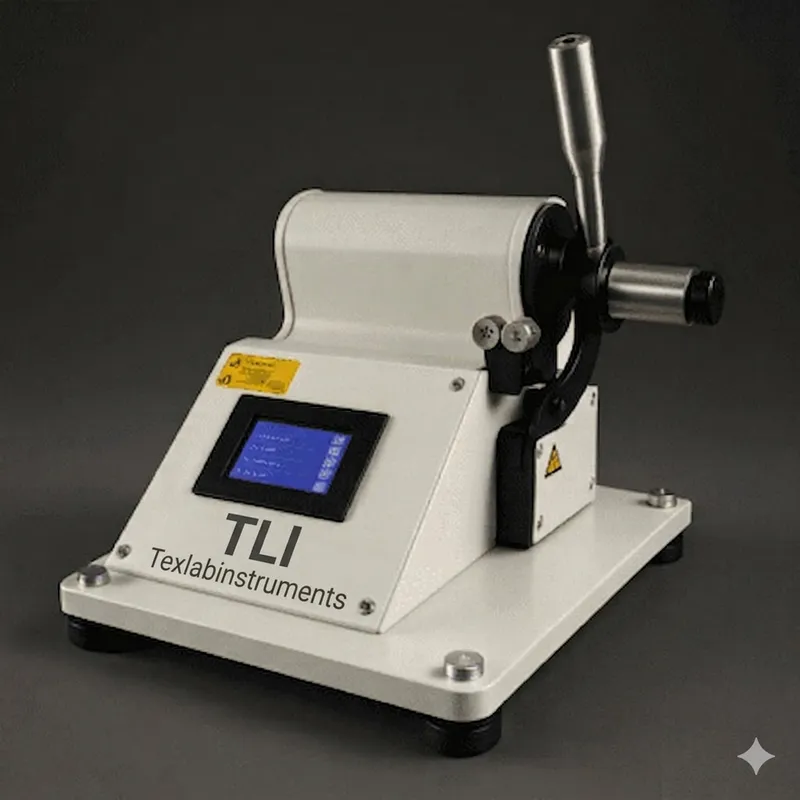
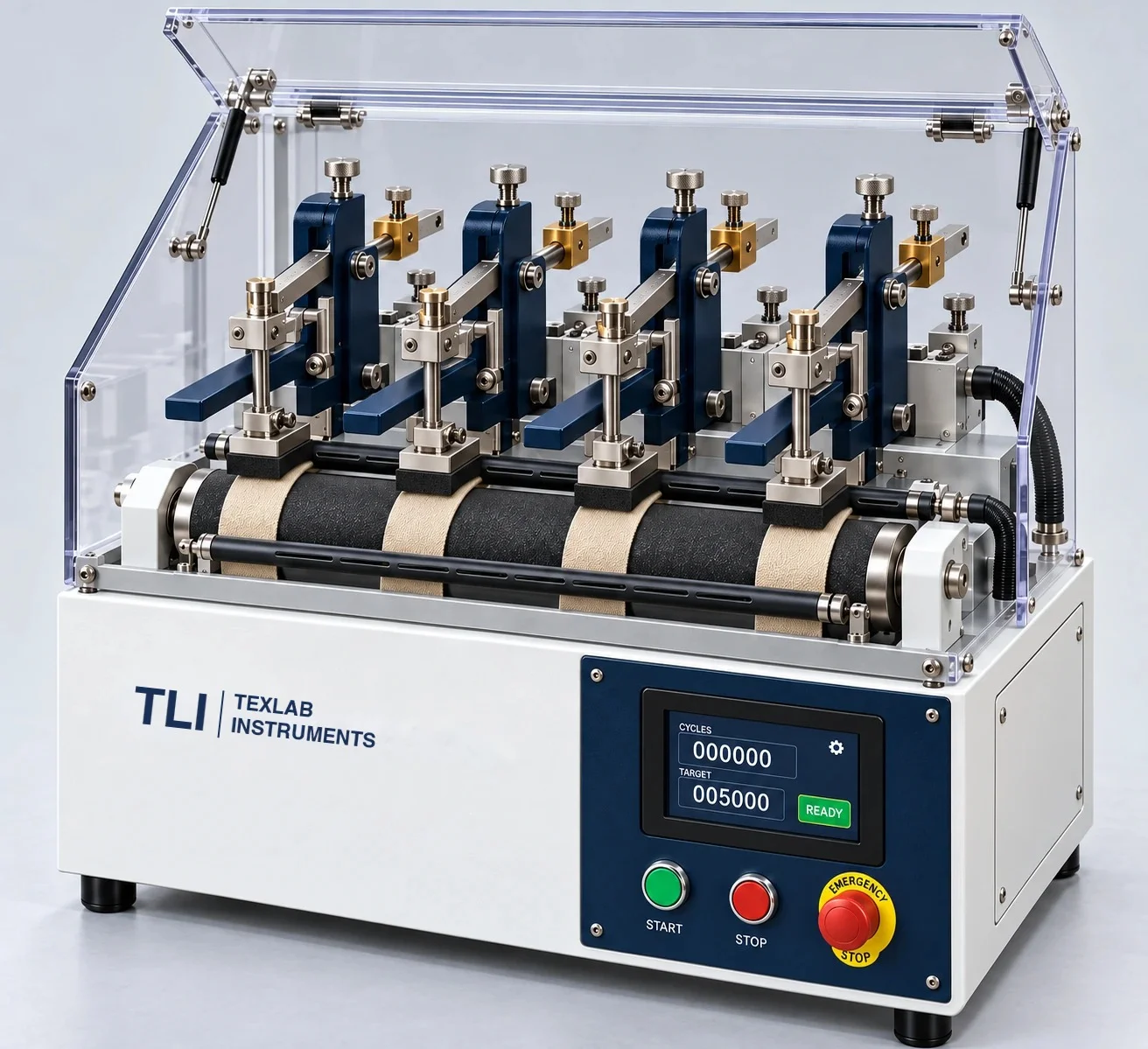
Evaluates the abrasion resistance of woven and upholstery fabrics by the ASTM D4157 Wyzenbeek oscillatory cylinder method. All four test stations work on one common cylinder; covered with the selected abradant, the cylinder oscillates at 90 ± 1 double rubs/min over a 76 ± 2 mm arc. Specimen tension (up to 26.7 N) and pressure (up to 15.575 N) are set individually at each station. The target count is entered on the 4.3-inch touchscreen PLC/HMI; the instrument stops at the set count, and lint and dust are removed by a two-slot vacuum tube.
Model technical data
- Test method: ASTM D4157 – oscillatory cylinder.
- Test stations: 4, all on one common abrading cylinder, with individual tension and pressure adjustment at each station.
- Oscillation stroke: 76 ± 2 mm (arc distance on the cylinder surface).
- Test speed: 90 ± 1 double rubs/min; one forward and one back movement is one double rub.
- Specimen size: 73 × 245 mm; specimens are clamped in front and rear jaws.
- Pressure pad: 50 × 50 mm (±1 mm); sponge rubber conforming to the curved surface.
- Tension mechanism: 340 g sliding weight; adjustable up to 26.7 N.
- Pressure mechanism: 150 g sliding weight; adjustable up to 15.575 N.
- Upholstery test setting: 17.8 N specimen tension / 13.4 N pressure.
- Abradant options: #10 cotton duck or wire screen.
- Control panel: 4.3-inch touchscreen PLC/HMI showing current double rubs, target count and test status.
- Cycle control: adjustable double-rub counter with automatic stop at the set count; physical start, stop and emergency-stop controls.
- Lint and dust extraction: two-slot vacuum tube.
- Housing and protection: painted metal housing, transparent cover, emergency stop.
Physical specifications and utilities
| Electrical supply | Approx. 220–240 V AC, 50/60 Hz, single phase; build-dependent. |
|---|---|
| Power / connected load | Approx. 150–400 W connected load for preliminary planning. |
| Overall instrument dimensions | Approx. 850 × 700 × 650 mm (W × D × H). |
| Instrument weight | Approx. 70–110 kg net. |
| Gross / shipping weight | Approx. 102–162.5 kg gross; estimated packing allowance. |
| Lab requirements | Level, stable working surface; specimen conditioning follows the selected method. |
Dimension order and approximate values are stated in each row. Packaging data are separate from instrument dimensions and net mass. Approx. rows are preliminary engineering estimates based on comparable equipment and function/capacity; they are not verified manufacturing measurements or standard requirements. Installation and shipment are finalised against the approved drawing and nameplate. Estimate scope: base product / one unit; external computer, bench and auxiliary plant excluded.
Specifications, dimensions, and power requirements are approximate and subject to change without prior notice for continuous design improvements.
Product technical specifications and images may vary according to manufacturing conditions and applicable standards.
Test and configuration
- Measured output / function
- Abrasion, appearance or damage change versus double rubs
- Parameters selected for the method
- Abradant, load, motion, cycles and endpoint
- Verification points
- Motion, counter, load and condition of abradant
Listed methods are application references. Suitability is established by assessing the selected hardware, current method and calibration together.
Test parameters for the reviewed method
Values belong to the stated source edition. Test recipe, fixture and delivered instrument configuration are selected together.
ASTM D4157 (earlier edition) · 6.1
- Oscillation travel 76 ± 2 mm; rate 90 ± 1 double rub/min; specimen tension and normal force are adjusted separately.
Control and recording specification
The following are method-specific software/recording requirements; delivered software modules are defined by the order scope.
- Method code and edition, specimen ID, operator and selected test parameters are linked to the record.
- The calculation and endpoint are defined by the selected method edition; instrument signals and operator assessments are kept distinct.
- Raw measurements, units, valid/invalid test flags and the reported result remain traceable.
- Calculations are checked against known inputs and an independent calculation; sensor channels are checked against calibration values.
Test standards
- ASTM D4157 Standard Test Method for Abrasion Resistance of Textile Fabrics (Oscillatory Cylinder Method)
- ISO 12402-7 Personal flotation devices — Part 7: Materials and components — Safety requirements and test methods
Prices start from €18. Request the technical specification and a quotation for this instrument.
Request a quoteCall usPDF catalogue