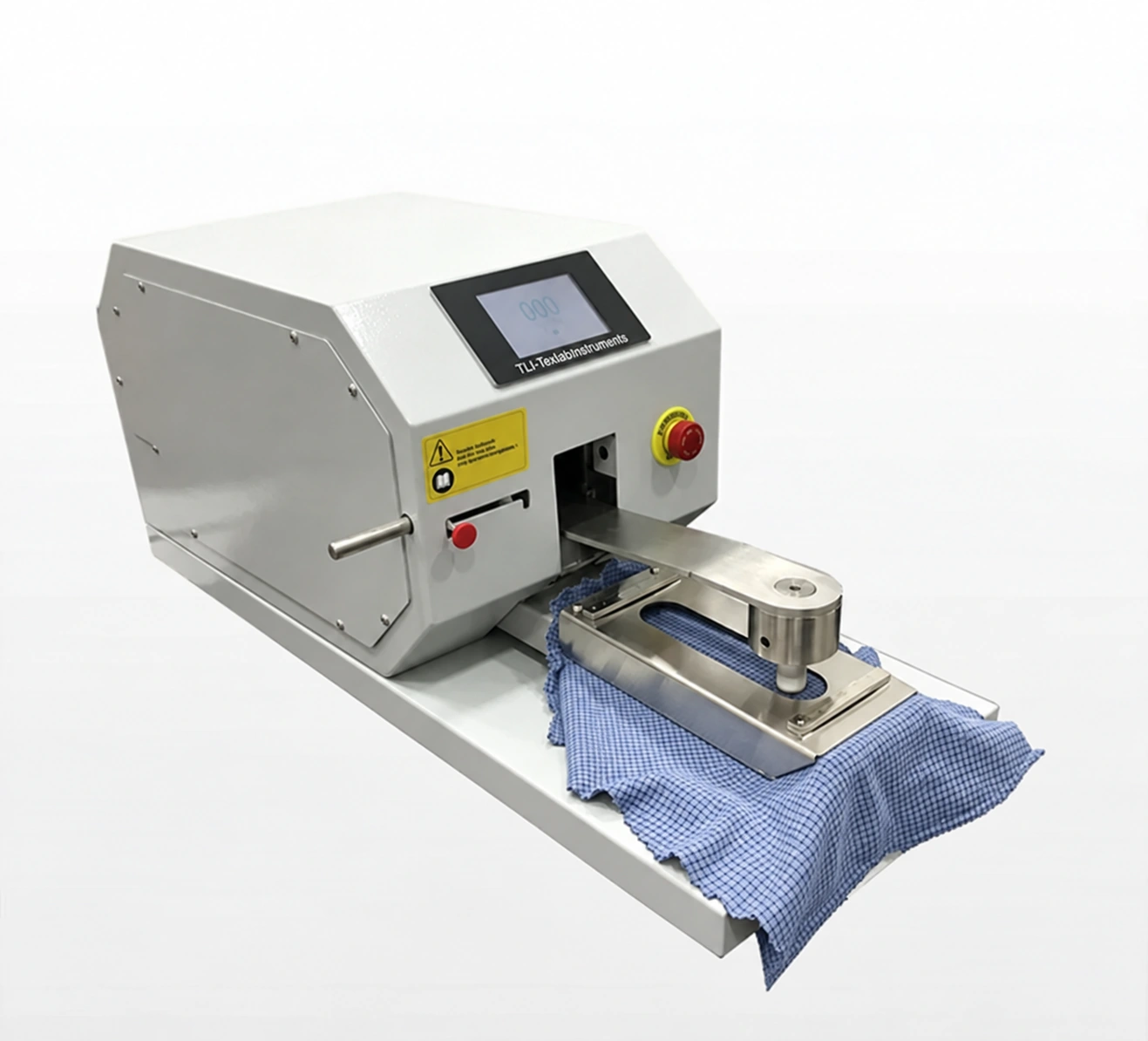
Photographs have been adapted for the website; dimensions may vary.
Crockmeter — Colour Fastness to Rubbing
Krokmetre — Sürtme Haslığı Test Cihazı
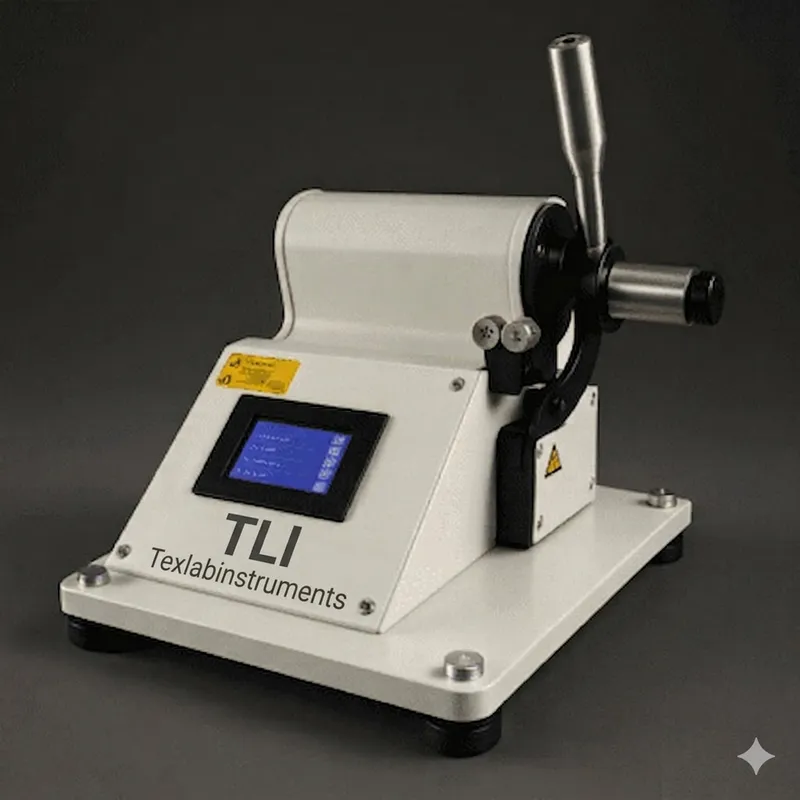
Evaluates textile colour fastness after dry or wet rubbing. Staining of the rubbing cloth is assessed using the grey scale for staining. Manual and motor-driven models are available.
Model technical data
- Measures rubbing fastness by the colour change of the specimen and the staining of the accompanying fabric.
- Specimens are rubbed against dry, undyed cotton accompanying fabric.
- The staining ratio of the accompanying fabric is evaluated on the staining grey scale.
- The automatic model has a digital controller and a motor.
Physical specifications and utilities
| Electrical supply | Manual version: no mains; motorised version: Approx. 220–240 V AC, 50/60 Hz, single phase. |
|---|---|
| Power / connected load | Manual: Approx. 0 W; motorised: Approx. 30–100 W. |
| Overall instrument dimensions | Approx. 650 × 250 × 350 mm (W × D × H). |
| Instrument weight | Approx. 8–20 kg net. |
| Gross / shipping weight | Approx. 18.8–35 kg gross; estimated packing allowance. |
| Lab requirements | Level, stable working surface; specimen conditioning follows the selected method. |
Dimension order and approximate values are stated in each row. Packaging data are separate from instrument dimensions and net mass. Approx. rows are preliminary engineering estimates based on comparable equipment and function/capacity; they are not verified manufacturing measurements or standard requirements. Installation and shipment are finalised against the approved drawing and nameplate. Estimate scope: base product / one unit; external computer, bench and auxiliary plant excluded.
Specifications, dimensions, and power requirements are approximate and subject to change without prior notice for continuous design improvements.
Product technical specifications and images may vary according to manufacturing conditions and applicable standards.
Test and configuration
- Measured output / function
- Staining grade of rubbing cloth after rubbing
- Parameters selected for the method
- Rubbing head, load, motion and wet/dry condition
- Verification points
- Force, stroke, counter and reference cloth
Listed methods are application references. Suitability is established by assessing the selected hardware, current method and calibration together.
Test parameters for the reviewed method
Values belong to the stated source edition. Test recipe, fixture and delivered instrument configuration are selected together.
ISO 105-X12:2001 / EN ISO 105-X12:2002 · 4.1.1 / 4.1.2 / 4.2
- Rubbing travel: 104 ± 3 mm; applied force: 9.0 ± 0.2 N.
- Standard cylindrical finger: 16.0 ± 0.1 mm diameter; pile materials use a separate finger geometry.
- Rubbing cloth for the cylindrical finger: 50 × 50 mm, ±2 mm on each dimension.
TS 7807 EN ISO 105-D02:2002 · 4.1, 6.2
- Organic-solvent rubbing recipe: 16 mm finger, 9 N vertical force, ten reciprocating rubs in 10 s over a 100 mm track. Track length is set separately from the ISO 105-X12 recipe.
AATCC 8-2007 · 5.2, 8.1, 9.2
- Crock cloth 50 × 50 mm; wet-test pickup 65 ±5%. Specimen and crock cloth conditioned for at least 4 h at 21 ± 1 °C and 65 ±2% RH; conditions included in the report.
AATCC 165-2008 · 9.1.2, 13.3
- Carpet-crocking option: rectangular block face 19.0 × 25.4 mm, cloth 25 × 100 mm; travel about 100 mm and downward force about 9 N. Select this special block separately from the standard round crockmeter finger.
M&S C8 — October 2004 · Apparatus; Test specimen; Dry Rub 3; Wet Rub 1–3; Notes 1, 7; pp.1–3
- M&S C8, October 2004, Note 1: straight rubbing track 105 ± 5 mm; flat circular finger 16 mm in diameter, downward force 9.0 ± 0.2 N. The finger remains in contact throughout the cycle. These are apparatus requirements of the reviewed historical edition; instrument verification is separate.
- Specimen at least 250 mm long in the test direction and at least 50 mm wide; SDC cotton rubbing cloth 50 × 50 mm. Dry test: 10 complete cycles / 20 strokes in a total of 10 ± 1 s. Distinguish complete cycles from one-way strokes.
- Use a separate specimen for wet testing. Wet the cloth with distilled water and squeeze excess water by hand; no mechanical squeezing or absorbent towels. Dry the cloth at no more than 60 °C and report dry/wet staining separately. Do not import the AATCC pickup percentage into this recipe. The three pages read are the October 2004 edition, not evidence of current M&S approval.
NEXT TM 6 — January 2008 · Apparatus; Specimen preparation; Dry/Wet procedures; Evaluation/report; pp.1–4
- NEXT TM6 January 2008: straight rubbing track 104 ± 3 mm; circular finger diameter 16 mm, downward force 9 N. These are requirements of this method edition; verify travel and force on the delivered instrument.
- Prepare two dry and two wet fabric specimens, each at least 50 × 200 mm, with lengthwise and widthwise directions represented in each pair. Yarn preparation template at least 140 × 50 mm. Each test uses 10 complete reciprocating cycles at 1 s per cycle.
- Set wet-cloth pickup to 100% with grade 3 distilled/deionised water, weighing and adjusting by blotting or rewetting; auxiliary balance accuracy 0.01 g. Dry at room temperature and report dry/wet results in both directions separately. Requires NEXT-approved cotton cloth without optical brightener, size or finish, and D65 assessment. The historical 2008 edition is not current NEXT approval.
Control and recording specification
The following are method-specific software/recording requirements; delivered software modules are defined by the order scope.
- The need for integrated software depends on the method and selected hardware; manual instruments use an external test record.
- Method code and edition, specimen ID, operator and selected test parameters are linked to the record.
- The calculation and endpoint are defined by the selected method edition; instrument signals and operator assessments are kept distinct.
- Raw measurements, units, valid/invalid test flags and the reported result remain traceable.
- Calculations are checked against known inputs and an independent calculation; sensor channels are checked against calibration values.
- The M&S C8 recipe records edition, verified travel/force, complete-cycle count and total duration. Manual wet-cloth preparation and separate dry/wet assessments are operator records; automatic moisture control or grey-scale scoring is not assumed delivered.
- Select NEXT TM6, M&S C8 and AATCC wet-rubbing recipes separately. The NEXT record holds dry/wet cloth masses, verification of 100% pickup, direction, 10 complete cycles and operator D65 assessment. Cloth preparation and grey-scale scoring are not assumed automatic instrument functions.
Historical method references (current method and fixture require separate review): BS 1006 D02
Download the technical brochure (PDF)Revision: 27 October 2026Test standards
Prices start from €18. Request the technical specification and a quotation for this instrument.
Request a quoteCall usPDF catalogue