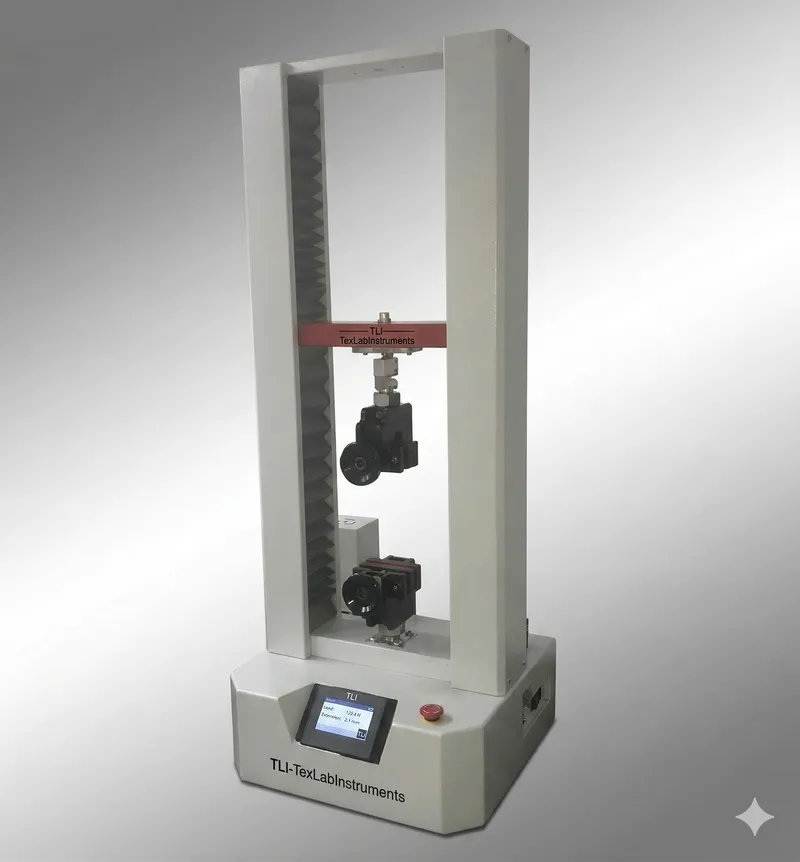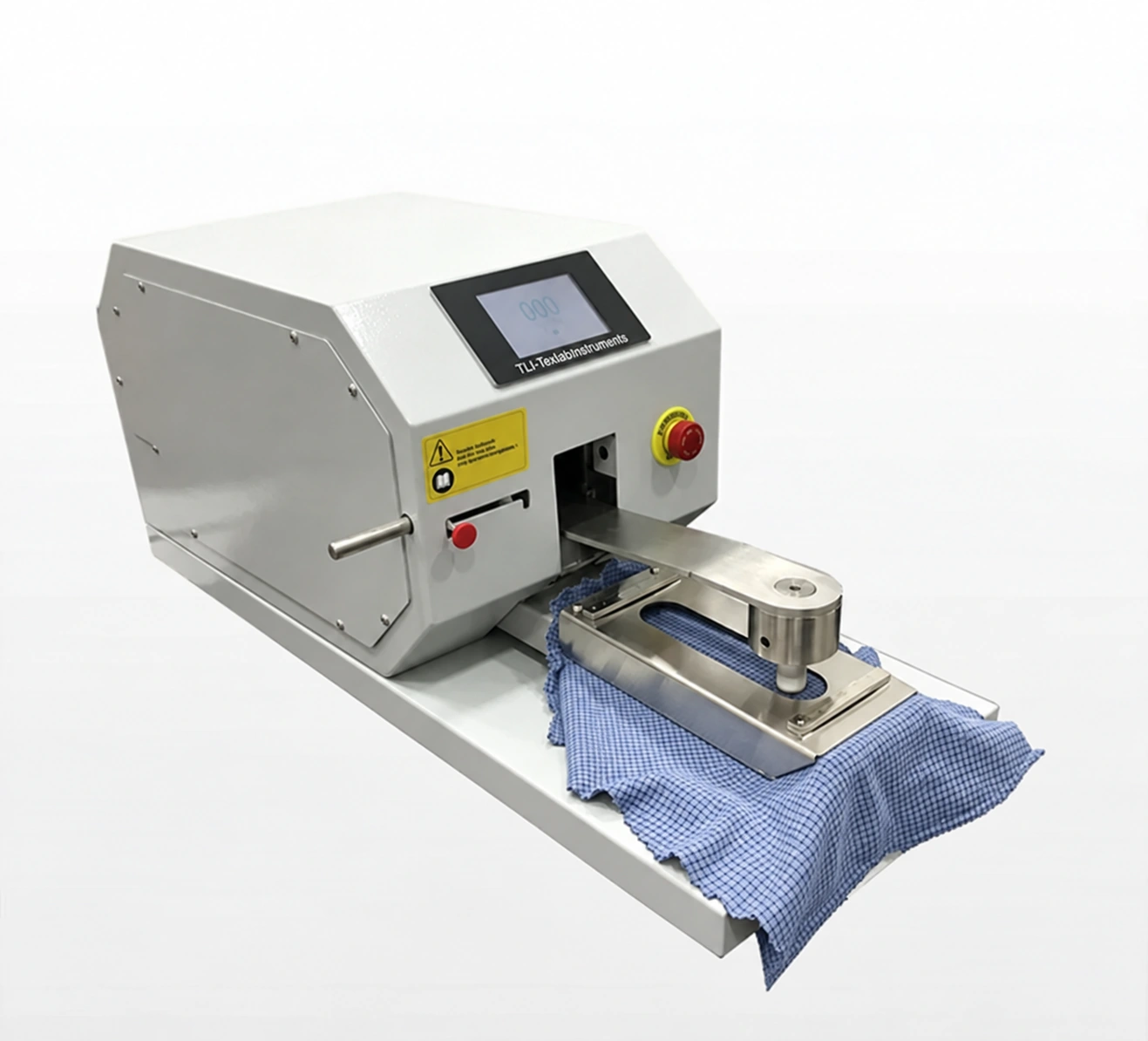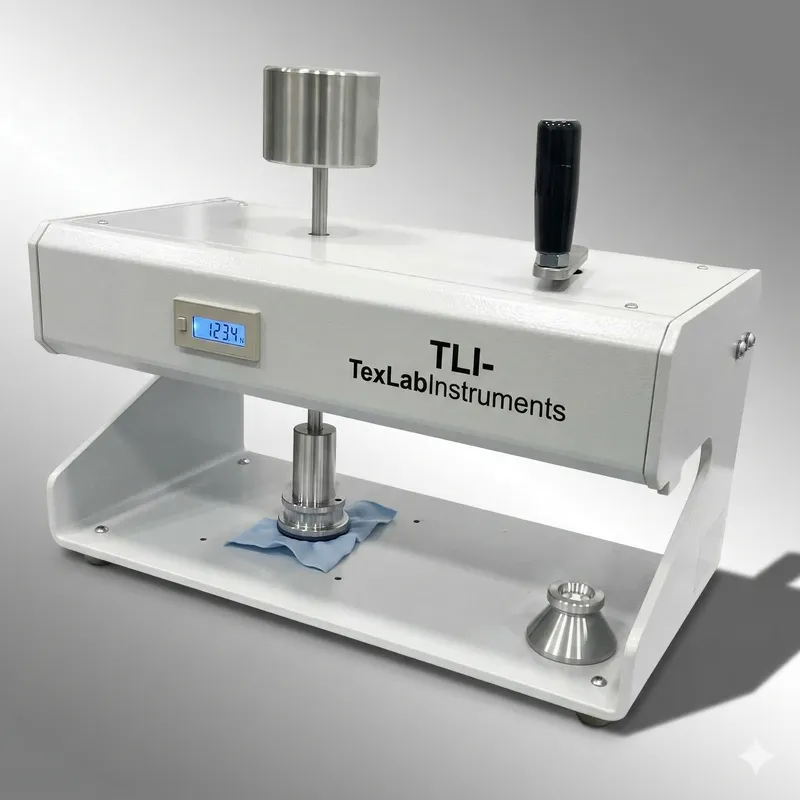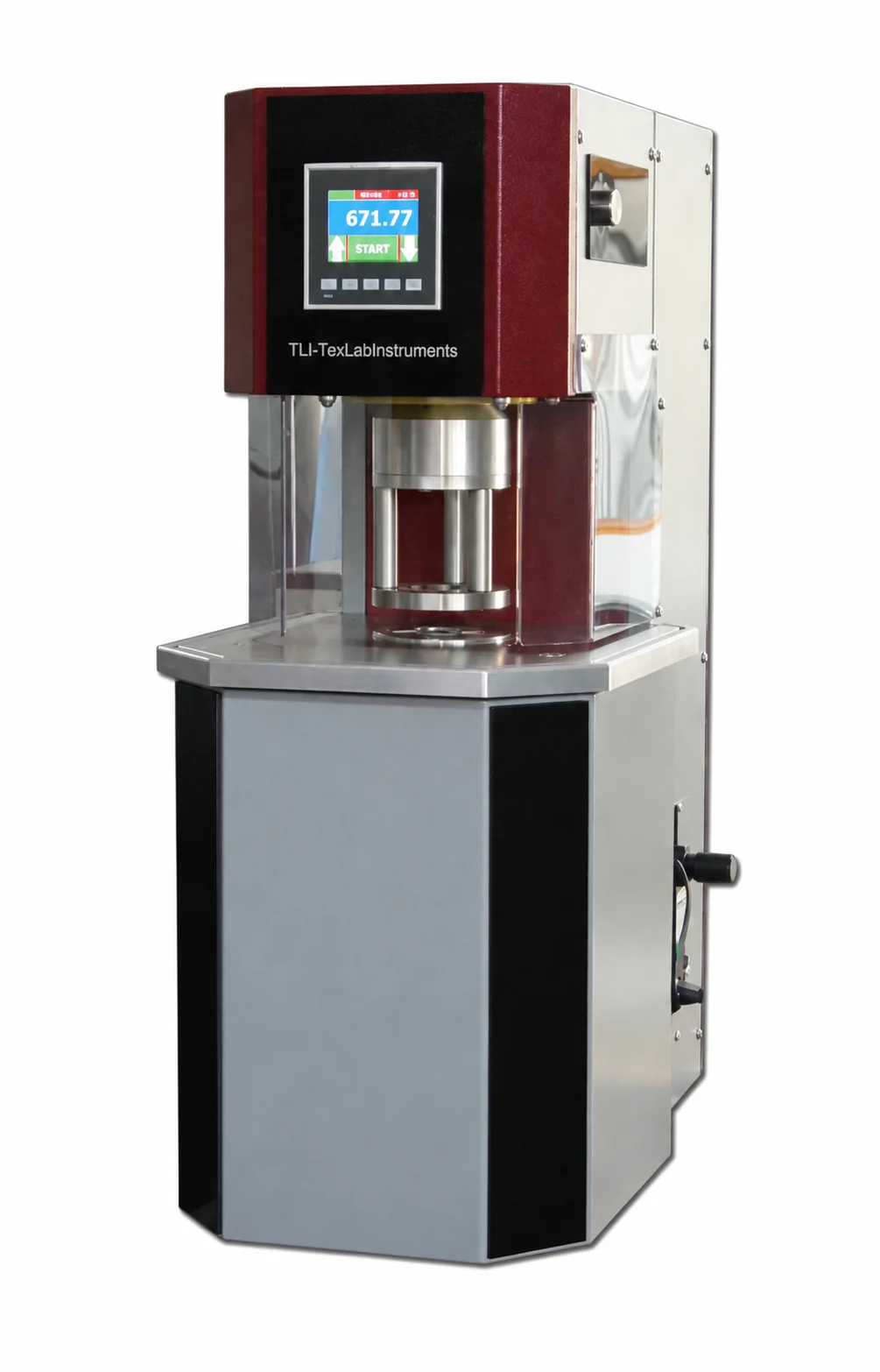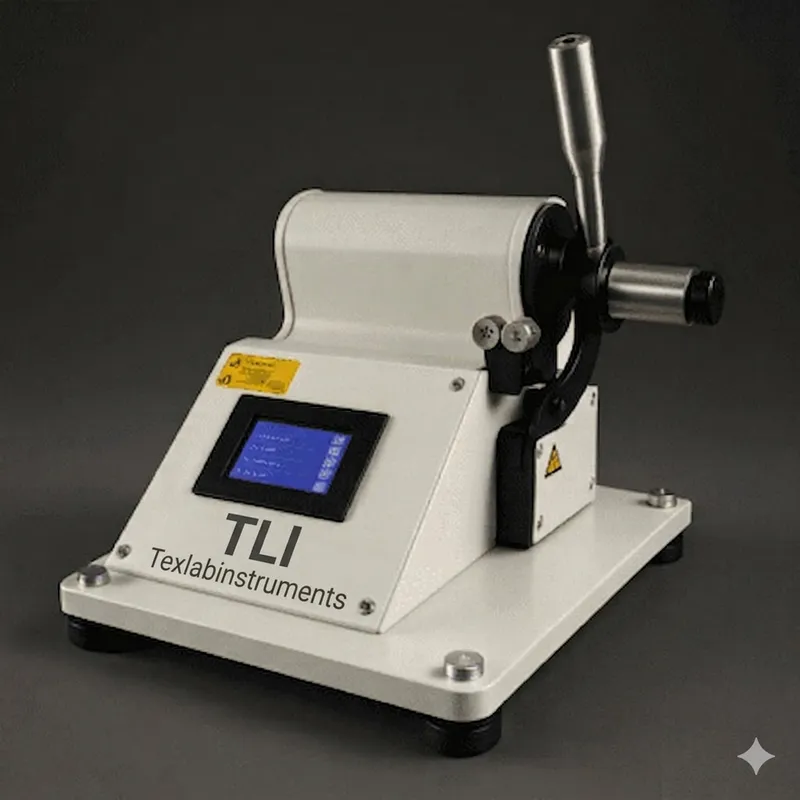
Photographs have been adapted for the website; dimensions may vary.
Elmendorf Tear Resistance Tester
Elmendorf Yırtılma Test Cihazı
Ballistic pendulum method for tear resistance.
Model technical data
- Ballistic tear test with microprocessor-controlled vertically moving pendulum.
- Force capacities: 800 cN (1.75 lb), 1600 cN (3.5 lb), 3200 cN (7.0 lb) and 6400 cN (14 lb).
- Measuring units: mN, cN, N, g, kg, oz and lb.
- Instant results and statistical evaluation on the LCD display.
- USB computer data output is standard.
- Cutting dies and blade set for specimen preparation are supplied with the instrument.
- Suitable for textile materials as well as paper and board products.
Physical specifications and utilities
| Electrical supply | Approx. 220–240 V AC, 50/60 Hz, single phase; build-dependent. |
|---|---|
| Power / connected load | Approx. 10–80 W connected load for preliminary planning. |
| Overall instrument dimensions | Approx. 550 × 400 × 650 mm (W × D × H). |
| Instrument weight | Approx. 20–45 kg net. |
| Gross / shipping weight | Approx. 32–66.2 kg gross; estimated packing allowance. |
| Interfaces | USB computer data output is standard. |
| Lab requirements | Dry filtered compressed air if the pneumatic circuit is fitted; operating pressure and flow confirmed at delivery. |
Dimension order and approximate values are stated in each row. Packaging data are separate from instrument dimensions and net mass. Approx. rows are preliminary engineering estimates based on comparable equipment and function/capacity; they are not verified manufacturing measurements or standard requirements. Installation and shipment are finalised against the approved drawing and nameplate. Estimate scope: base product / one unit; external computer, bench and auxiliary plant excluded.
Specifications, dimensions, and power requirements are approximate and subject to change without prior notice for continuous design improvements.
Product technical specifications and images may vary according to manufacturing conditions and applicable standards.
Test and configuration
- Measured output / function
- Tear force derived from pendulum energy (N)
- Parameters selected for the method
- Pendulum range, specimen direction and initial slit
- Verification points
- Pendulum, friction loss and calibration weight
Listed methods are application references. Suitability is established by assessing the selected hardware, current method and calibration together.
Test parameters for the reviewed method
Values belong to the stated source edition. Test recipe, fixture and delivered instrument configuration are selected together.
ISO 13937-1 (earlier edition) · 6.2
- Jaw gap 3 ± 0.5 mm; initial slit 20 ± 0.5 mm; effective tear length 43 ± 0.5 mm.
ASTM D1424-96 · 6.3, 8.3, A1.4
- Elmendorf effective tear length 43.0 ± 0.15 mm; initial slit 20 mm. Adjustment check uses jaw gap 2.5 ± 0.25 mm. Usable scale range is 20-80% for standard apparatus and 20-60% for the high-capacity type.
ASTM D5734-95 (2001) · 6.5–6.6, 8.1
- For nonwoven Elmendorf testing, remaining tear distance is 43 ±0.15 mm and this edition's jaw-spacing gauge is 2.8 ±0.3 mm. Select 20–80% full scale for the standard-capacity instrument. Do not automatically copy D1424 settings.
ISO 9290:1990 · 5.1-5.2, 6.1
- Woven-fabric tear method: initial slit 20 ± 0.5 mm, propagated tear distance 43 ± 0.5 mm. Select the template and pendulum capacity for this edition; the method excludes nonwovens and knitted fabrics.
ASTM D689-03 · 5.3
- Paper tearing requires jaw depth 15.9 ± 0.1 mm and width at least 25 mm; pendulum-axis to jaw centreline distance 103 ± 0.1 mm. Do not equate the paper fixture with a fabric Elmendorf template; select ply count and capacity separately.
ISO 1974:2012 · 5.1.4-5.1.5
- Paper Elmendorf method: jaw gap 2.8 ± 0.3 mm, gripping depth 15 ± 1 mm and width 25 ± 1 or 36 ± 1 mm. Tear length after the slit 43.0 ± 0.5 mm. Verify paper geometry separately from fabric/coated-fabric kits.
ISO 4674-2:2021, corrected 2021-11 · 5.1
- Coated-fabric pendulum method: jaw gap 2.8 ± 0.3 mm; clamping-line to pendulum-axis distance 104 ± 1 mm at 27.5 ± 0.5° from vertical. Verify non-slip gripping and first-swing energy measurement. Do not assume equivalence to paper jaws.
Control and recording specification
The following are method-specific software/recording requirements; delivered software modules are defined by the order scope.
- Method code and edition, specimen ID, operator and selected test parameters are linked to the record.
- The calculation and endpoint are defined by the selected method edition; instrument signals and operator assessments are kept distinct.
- Raw measurements, units, valid/invalid test flags and the reported result remain traceable.
- Calculations are checked against known inputs and an independent calculation; sensor channels are checked against calibration values.
- For NF G07-149:1981, the AFNOR scope summary specifies a low-capacity 5–10 daN pendulum class and results within 15–85% of the selected full scale. Not every model pendulum belongs to this class; verify pendulum, calibration for the specific torn length and specimen die separately. This is a publisher scope note only: the standard body/apparatus clauses remain unavailable and ISO 13937-1 geometry is not automatically equivalent.
Historical method references (current method and fixture require separate review): ASTM D5734, BS 4253, BS 4468, DIN 53862, ISO 9290, NF G07-149
Download the technical brochure (PDF)Revision: 27 October 2026Test standards
Prices start from €18. Request the technical specification and a quotation for this instrument.
Request a quoteCall usPDF catalogue