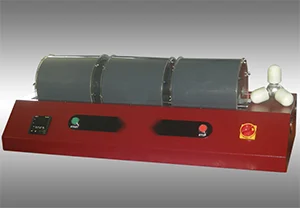
Photographs have been adapted for the website; dimensions may vary.
Hexapod Tumble Tester (1 / 3 / 6 stations)
Hexapod Tambur Test Cihazı (1 / 3 / 6 istasyon)
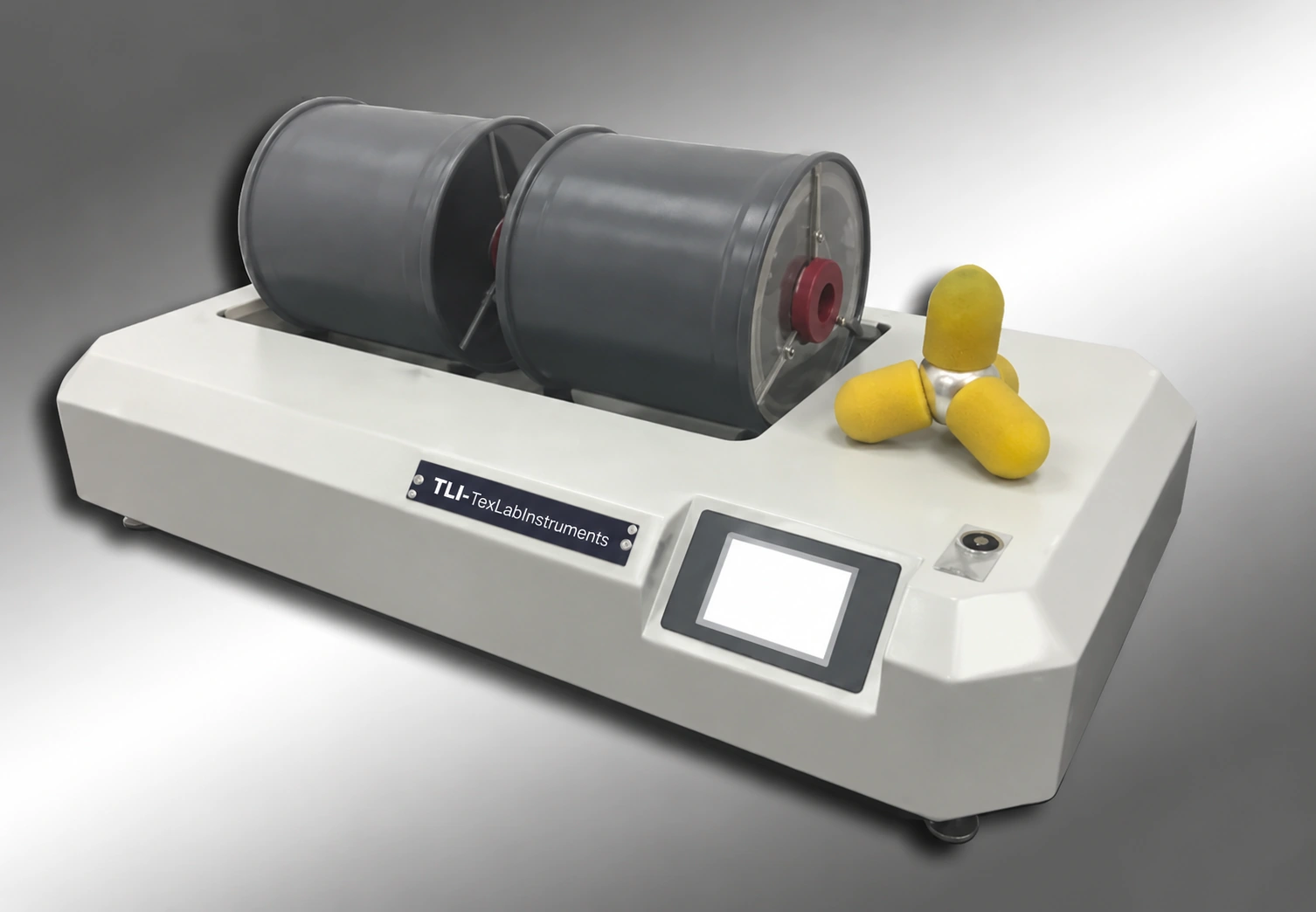
Appearance change testing of carpets and textile floor coverings. The specimen lines the inside of the drum; a metal test body with six polyurethane studs tumbles over it as the drum rotates, and the change in surface structure and colour appearance is assessed. Single-station benchtop, 3-station single row and 6-station (3 × 2) floor models. ISO 23122:2025 (formerly ISO 10361).
Model technical data
- Principle: a metal test body with six polyurethane studs tumbles over the specimen inside the drum.
- Single station: benchtop, 4.3-inch touchscreen; approx. 680 × 550 × 500 mm, 75 kg.
- 3 stations: single row, common touch panel; approx. 1,550 × 650 × 650 mm, 170 kg.
- 6 stations: 3 columns × 2 rows, floor type; approx. 1,550 × 750 × 1,450 mm, 300 kg.
- Standards: ISO 23122:2025; ISO 10361:2015 (withdrawn, previous method).
- Single-station overall dimensions (W × D × H): approximately 680 × 550 × 500 mm; multi-station dimensions are specified separately.
- Single-station net weight: approximately 75 kg, including test masses and excluding packaging.
Physical specifications and utilities
| Electrical supply | Approx. 220–240 V AC, 50/60 Hz, single phase; build-dependent. |
|---|---|
| Power / connected load | Approx. 200–1000 W connected load for preliminary planning. |
| Overall instrument dimensions | Single station: benchtop, 4.3-inch touchscreen; approx. 680 × 550 × 500 mm, 75 kg. 3 stations: single row, common touch panel; approx. 1,550 × 650 × 650 mm, 170 kg. 6 stations: 3 columns × 2 rows, floor type; approx. 1,550 × 750 × 1,450 mm, 300 kg. |
| Instrument weight | Single station: benchtop, 4.3-inch touchscreen; approx. 680 × 550 × 500 mm, 75 kg. 3 stations: single row, common touch panel; approx. 1,550 × 650 × 650 mm, 170 kg. 6 stations: 3 columns × 2 rows, floor type; approx. 1,550 × 750 × 1,450 mm, 300 kg. Single-station net weight: approximately 75 kg, including test masses and excluding packaging. |
| Gross / shipping weight | Approx. gross by station count 1: 110–120 kg; 3: 215–240 kg; 6: 355–400 kg; published 75/170/300 kg plus estimated packing allowance. |
| Lab requirements | Level, stable working surface; specimen conditioning follows the selected method. |
Dimension order and approximate values are stated in each row. Packaging data are separate from instrument dimensions and net mass. Approx. rows are preliminary engineering estimates based on comparable equipment and function/capacity; they are not verified manufacturing measurements or standard requirements. Installation and shipment are finalised against the approved drawing and nameplate. Estimate: single station; 3/6-station versions are sized separately.
Specifications, dimensions, and power requirements are approximate and subject to change without prior notice for continuous design improvements.
Product technical specifications and images may vary according to manufacturing conditions and applicable standards.
Test and configuration
- Measured output / function
- Appearance and damage assessment after mechanical action
- Parameters selected for the method
- Drum, loading element, turn count and specimen restraint
- Verification points
- Rotational speed, counter and loading element
Listed methods are application references. Suitability is established by assessing the selected hardware, current method and calibration together.
Test parameters for the reviewed method
Values belong to the stated source edition. Test recipe, fixture and delivered instrument configuration are selected together.
TS ISO 10361:2003 · 6.1.1–6.1.3
- Hexapod method B only: drum internal diameter 305 ±1 mm, internal depth 200 ±1 mm; speed 35 ±2 rpm, reversing every 15 minutes. Total body mass with six polyurethane studs is 3.8 ±0.1 kg. Do not infer equivalence to Vettermann method A or current ISO 23122 settings.
Control and recording specification
The following are method-specific software/recording requirements; delivered software modules are defined by the order scope.
- Method code and edition, specimen ID, operator and selected test parameters are linked to the record.
- The calculation and endpoint are defined by the selected method edition; instrument signals and operator assessments are kept distinct.
- Raw measurements, units, valid/invalid test flags and the reported result remain traceable.
- Calculations are checked against known inputs and an independent calculation; sensor channels are checked against calibration values.
Historical method references (current method and fixture require separate review): ISO 10361
Download the technical brochure (PDF)Revision: 28 October 2026Test standards
Prices start from €18. Request the technical specification and a quotation for this instrument.
Request a quoteCall usPDF catalogue