Photographs have been adapted for the website; dimensions may vary.
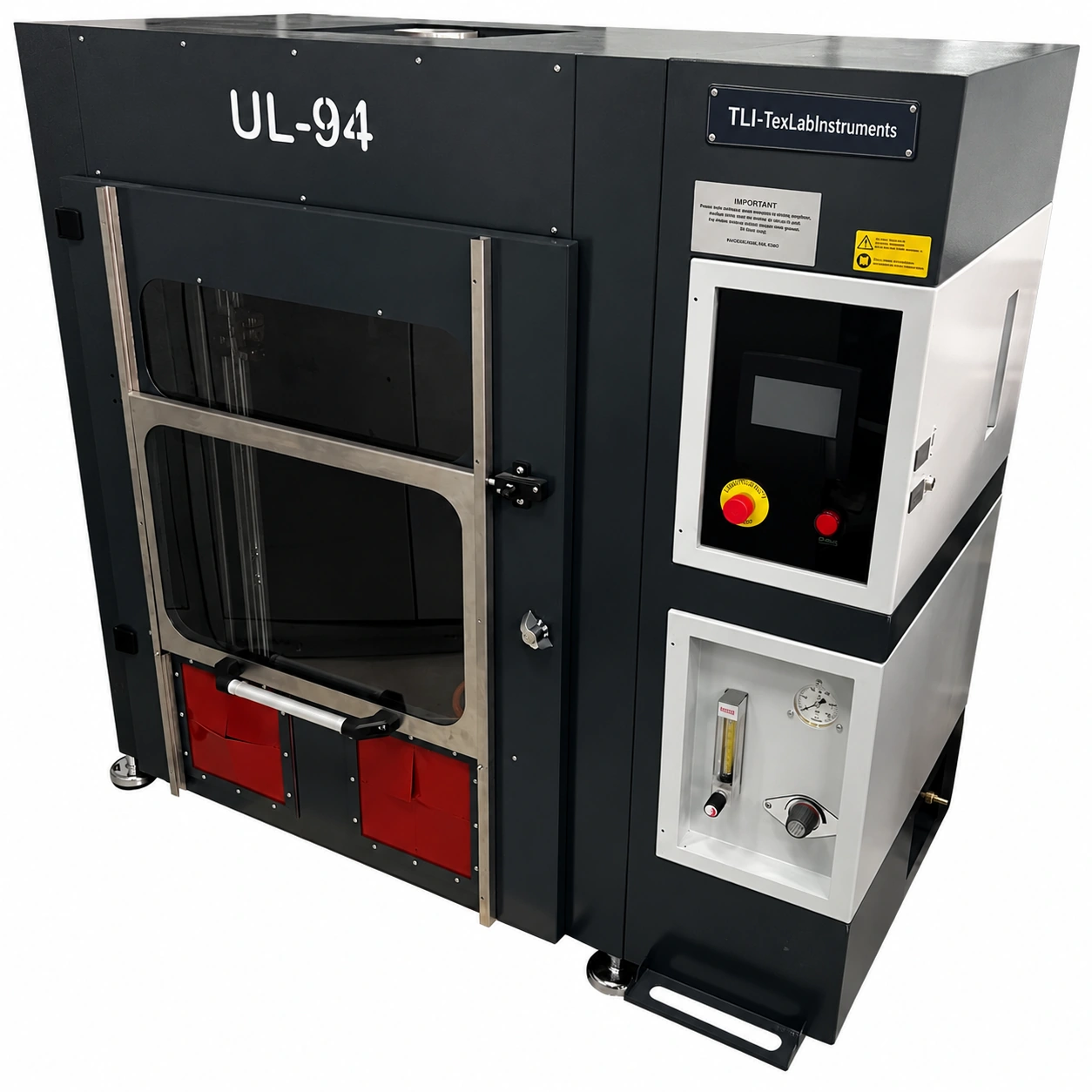
UL94 / IEC 60695 Burn Tester
UL94 / IEC 60695 Yanmazlık Cihazı
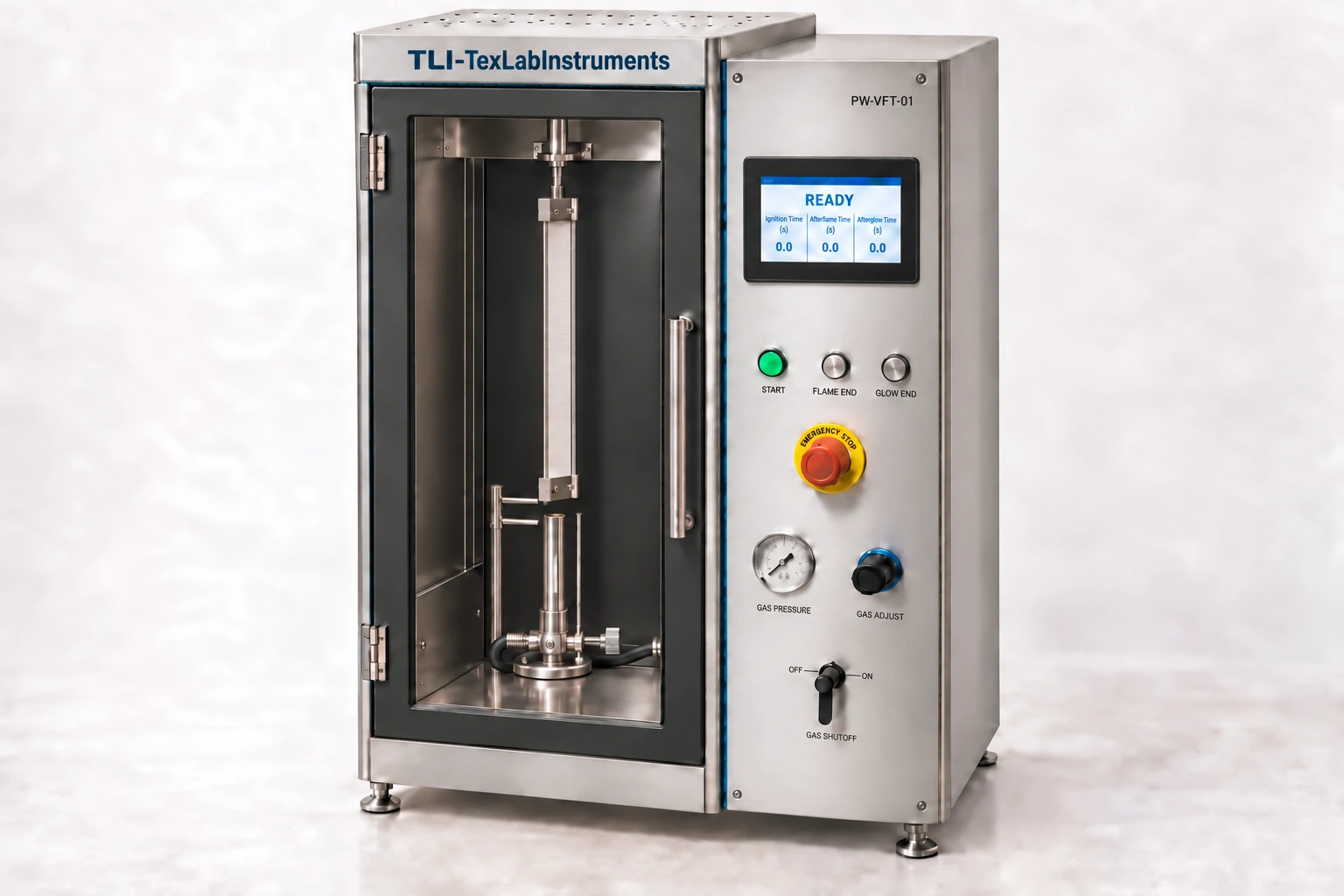
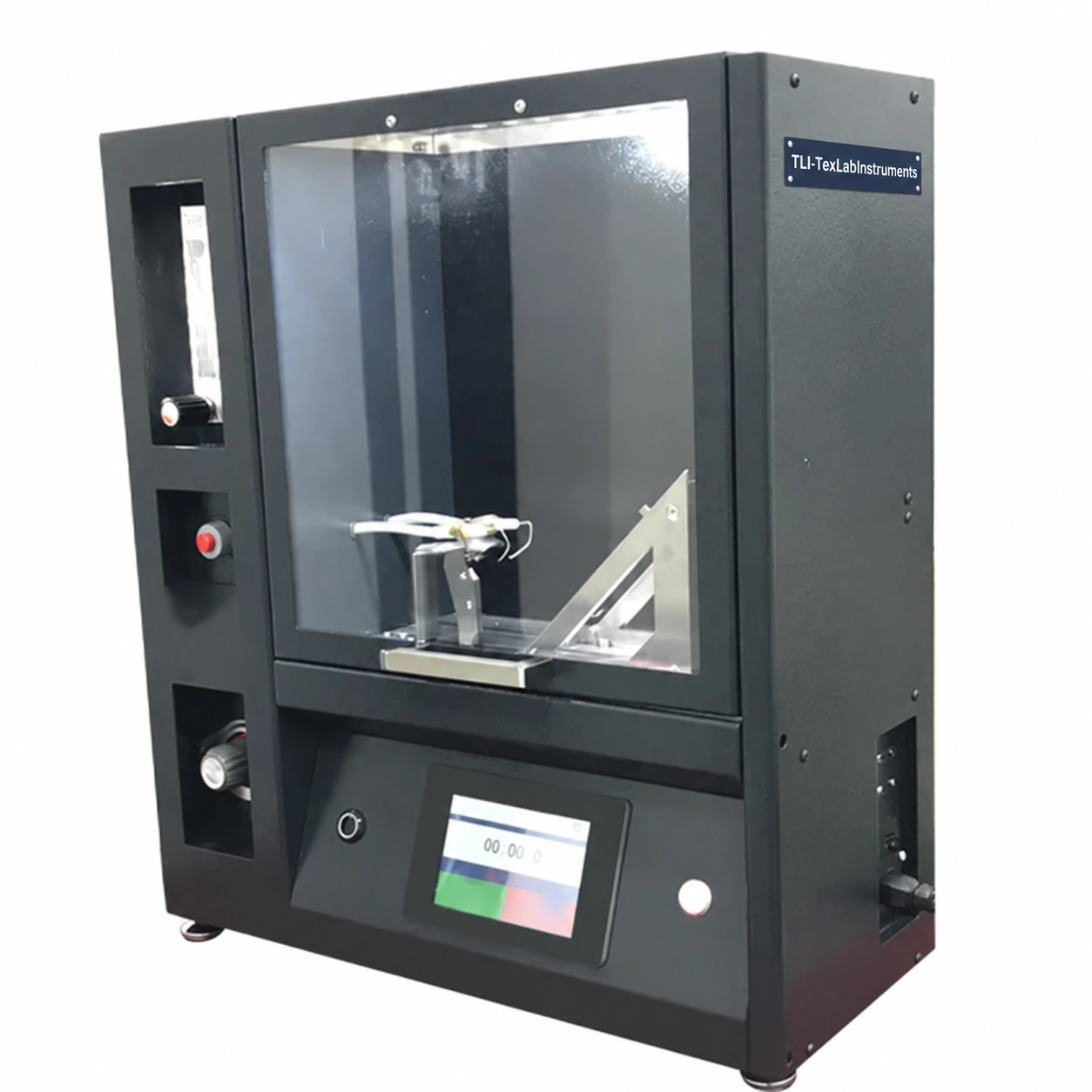
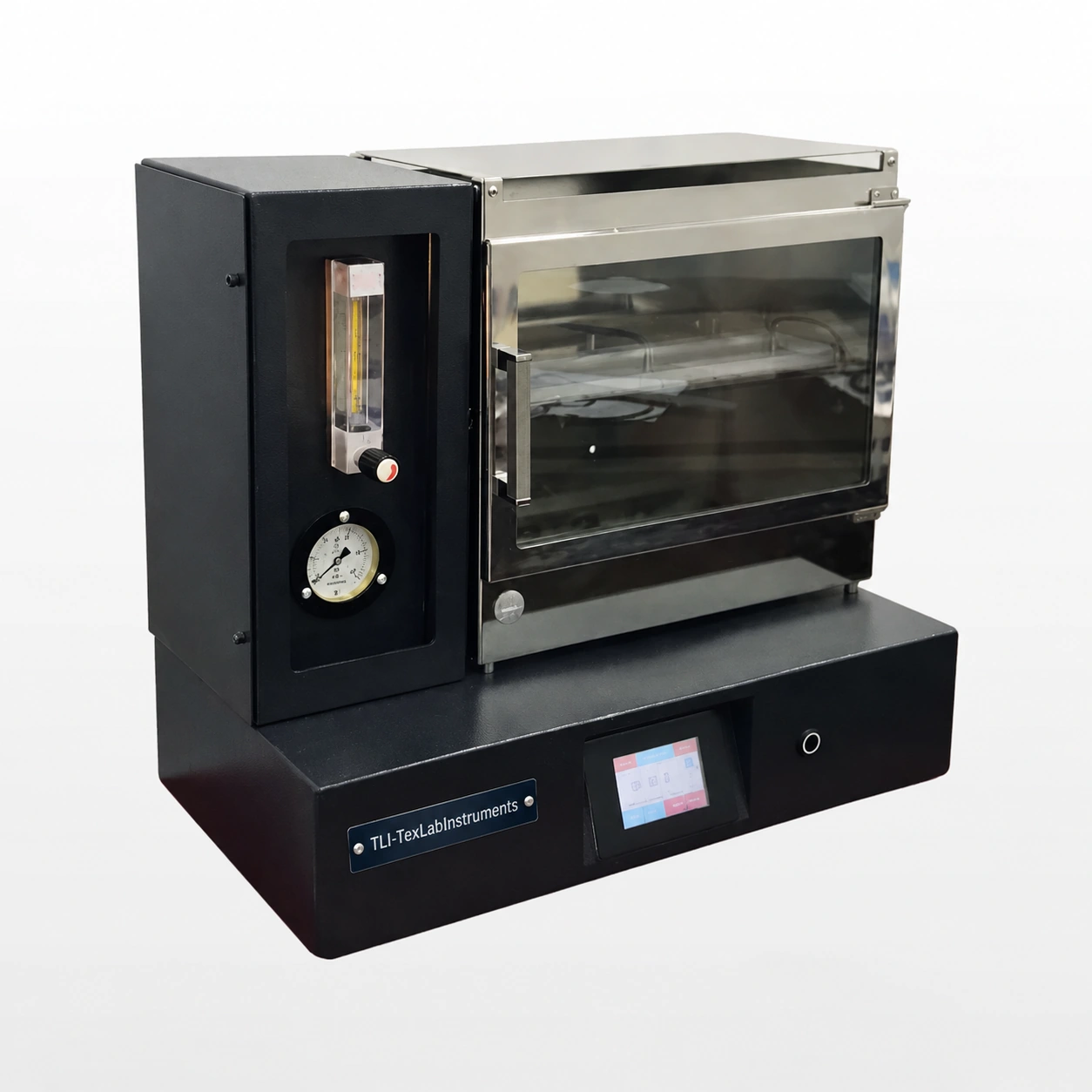
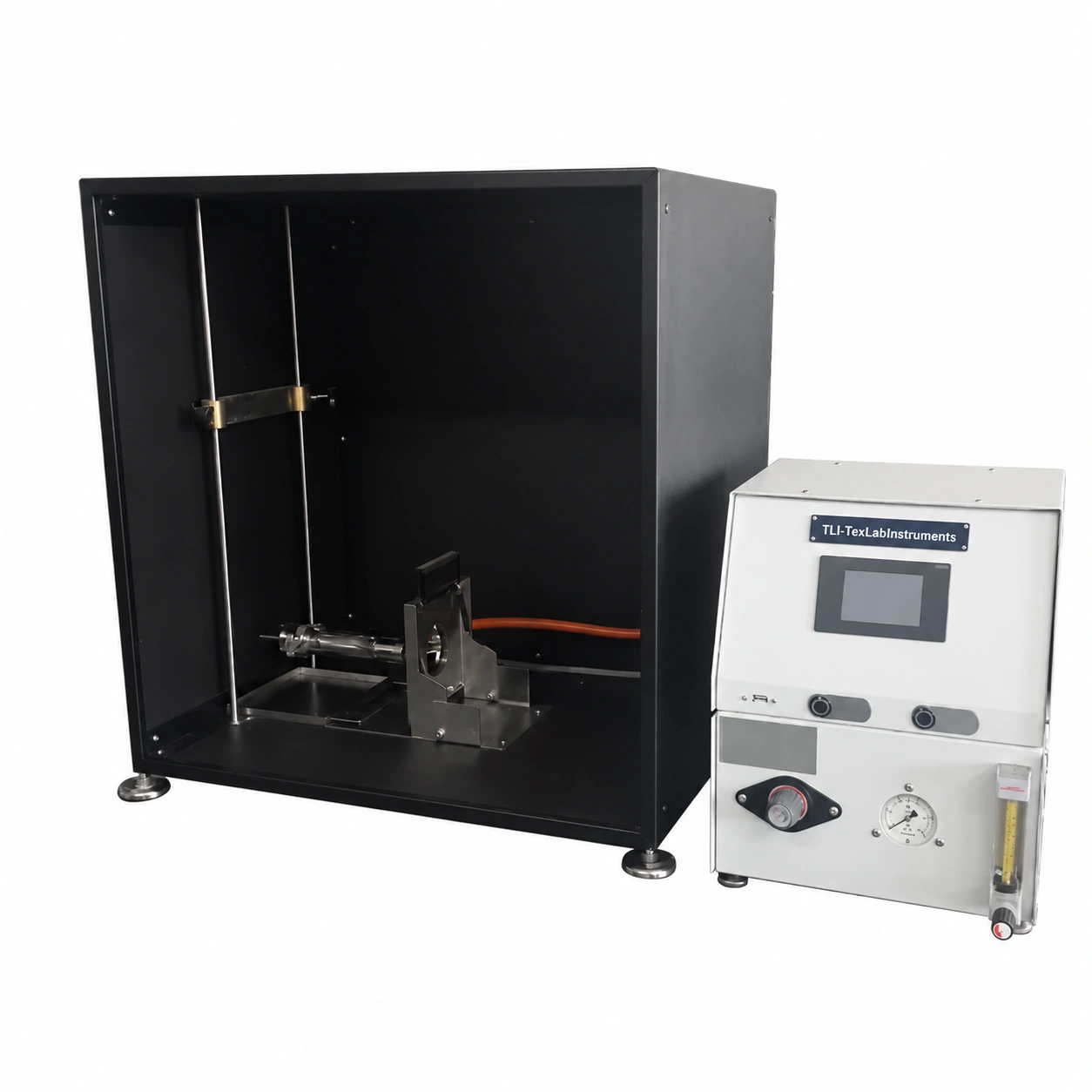
Test cabinet for assessing horizontal and vertical burning behaviour of plastics. Configure burner, flame power, specimen support and timing for the selected UL/IEC/ASTM submethod.
Model technical data
- Test flame: 50 W and 500 W.
- Flame height: 20-175 mm.
- Bunsen burner diameter: 9.5 mm ± 0.5 mm.
- Burner tube: 9.5 mm ± 0.3 mm inner diameter, 100 mm ± 10 mm length.
- Burner angle: 0°, 20°, 45°.
- Temperature measurement range: 0-1000 °C.
- Flowmeter: 105 ± 10 ml/min and 965 ± 30 ml/min.
- Digital timers with 0.1 s resolution.
- Power supply: 230 V, 50 Hz. Gas: methane (min. 98% purity, not supplied).
- Switchable horizontal/vertical test program and top exhaust extraction fan.
Physical specifications and utilities
| Electrical supply | Power supply: 230 V, 50 Hz. Gas: methane (min. 98% purity, not supplied). |
|---|---|
| Power / connected load | Approx. 50–200 W connected load for preliminary planning. |
| Overall instrument dimensions | Approx. 1400 × 900 × 1500 mm (W × D × H); 1 kW chamber option. |
| Instrument weight | Approx. 70–130 kg net. |
| Gross / shipping weight | Approx. 102–187.5 kg gross; estimated packing allowance. |
| Gas requirements | Power supply: 230 V, 50 Hz. Gas: methane (min. 98% purity, not supplied). |
| Lab requirements | Method-specified test gas, regulator and exhaust / fume hood; gas type and flow follow the selected method and burner. |
Dimension order and approximate values are stated in each row. Packaging data are separate from instrument dimensions and net mass. Approx. rows are preliminary engineering estimates based on comparable equipment and function/capacity; they are not verified manufacturing measurements or standard requirements. Installation and shipment are finalised against the approved drawing and nameplate. Estimate scope: base product / one unit; external computer, bench and auxiliary plant excluded.
Specifications, dimensions, and power requirements are approximate and subject to change without prior notice for continuous design improvements.
Product technical specifications and images may vary according to manufacturing conditions and applicable standards.
Test and configuration
- Measured output / function
- Burning behaviour using HB/V methods
- Parameters selected for the method
- Horizontal/vertical setup, burner, cotton indicator and timing
- Verification points
- Burner/gas flow, geometry and timing
Listed methods are application references. Suitability is established by assessing the selected hardware, current method and calibration together.
Test parameters for the reviewed method
Values belong to the stated source edition. Test recipe, fixture and delivered instrument configuration are selected together.
ASTM D4986-98 · 6.3, 6.5–6.6, 7.1
- The cellular-plastics submethod requires a wing top with a 48 ±1 mm by 1.3 ±0.05 mm opening and a 6.4 mm mesh support; maximum specimen thickness is 13 mm. This fixture is distinct from solid-plastics horizontal/vertical setups; verify the selected hardware.
ASTM D635-03 · 6.3–6.7, 9
- The horizontal plastics submethod requires a D5025-type burner, uniform gas flow and a timing device accurate to 0.5 seconds. Record burning time and distance separately; verify burner/flame calibration for the horizontal method. Vertical and foam-plastic fixtures are distinct.
ISO 9773:1998 · 6.1-6.15
- Vertical thin-flexible-plastic method: draught-free enclosure at least 0.5 m³; 50 W burner, length 100 ± 10 mm and bore 9.5 ± 0.3 mm. Methane at least 98%; timer resolution 0.1 s; mandrel 13 ± 0.5 mm. Select the VTM fixture separately.
UL 94:2013, revision 2014-07-11 · 5
- UL 94 apparatus check: draught-free enclosure at least 0.5 m³; burner length 100 ± 10 mm, bore 9.5 ± 0.3 mm; timing to 0.1 s. HB/V, 5V and VTM configurations require different flames and fixtures; one setup does not cover every class.
ISO 9772:2020 / SIST ISO 9772:2022 · 5.1-5.7
- Cellular-plastic horizontal method: wing-top burner opening 48 ± 1 × 1.3 ± 0.05 mm, support gauze approximately 215 × 75 mm and specimen-to-burner gap 13 ± 1 mm. Draught-free chamber at least 0.5 m³; the normal UL 94 vertical fixture alone does not provide this arrangement.
ASTM D3801-00 · 4.1, 6.1-6.5
- Vertical solid-plastic burning requires a draught-free chamber at least 0.5 m³, methane at least 98% and timer accuracy 0.5 s. Apply flame twice for 10 s; record afterflame after the first exposure and afterflame/afterglow after the second.
IEC 60695-11-10:2013 · 5.1, 6.1-6.10
- 50 W horizontal/vertical plastic burning requires a draught-free chamber at least 0.5 m³, IEC 60695-11-4 burner and timer resolution at most 0.5 s. HB and V use different fixtures; the 500 W 5VA/5VB method is distinct.
IEC 60695-11-2:2017 / GOST IEC 60695-11-2:2017 (IDT) · 4.1–4.2, 5.1–5.3, 6.1–6.3
- This reference concerns a 1 kW premixed flame and requires a suitable burner/control option distinct from the 50/500 W arrangement. Propane purity ≥95%; method A flows at 23 °C/0.1 MPa: propane 650 ± 10 cm³/min, clean air 10.0 ± 0.3 dm³/min. Chamber internal volume ≥1.0 m³.
- Flame confirmation: copper block heats from 100 ± 5 °C to 700 ± 3 °C in 46 ± 6 s; timing error ±0.5 s. Record flows and confirmation results with the recipe. 1 kW denotes thermal output, not electrical consumption.
IEC 60695-11-20:2015 + Cor.1:2016 / GOST IEC 60695-11-20:2017 (IDT) · 6.1–6.11, 8.1–8.3
- 500 W flame method: chamber internal volume ≥0.5 m³, dark surfaces, <20 lx at specimen; timer resolution ≤0.5 s. Burner is separately verified to IEC 60695-11-3 method A/C. Extraction is off during testing and on afterwards.
- Bar specimen: five flame applications, 5 ± 0.5 s on / 5 ± 0.5 s withdrawn; operational burner angle 20 ± 5°, inner-cone tip 0–3 mm from specimen. Record afterflame/afterglow, cotton ignition and plate burn-through separately.
ASTM D5048-97 · 10.1.1, 10.1.3–10.1.4
- 1997 method: draught-free environment; bar-test burner angle 20 ± 5°. Five applications, each 5 ± 0.5 s flame / 5 ± 0.5 s withdrawn. Record post-test afterflame/afterglow and cotton-igniting drips.
Control and recording specification
The following are method-specific software/recording requirements; delivered software modules are defined by the order scope.
- Method code and edition, specimen ID, operator and selected test parameters are linked to the record.
- The calculation and endpoint are defined by the selected method edition; instrument signals and operator assessments are kept distinct.
- Raw measurements, units, valid/invalid test flags and the reported result remain traceable.
- Calculations are checked against known inputs and an independent calculation; sensor channels are checked against calibration values.
Test standards
Prices start from €18. Request the technical specification and a quotation for this instrument.
Request a quoteCall usPDF catalogue