Photographs have been adapted for the website; dimensions may vary.
Cut Resistance Tester
Bıçakla Kesilme Direnci Cihazı
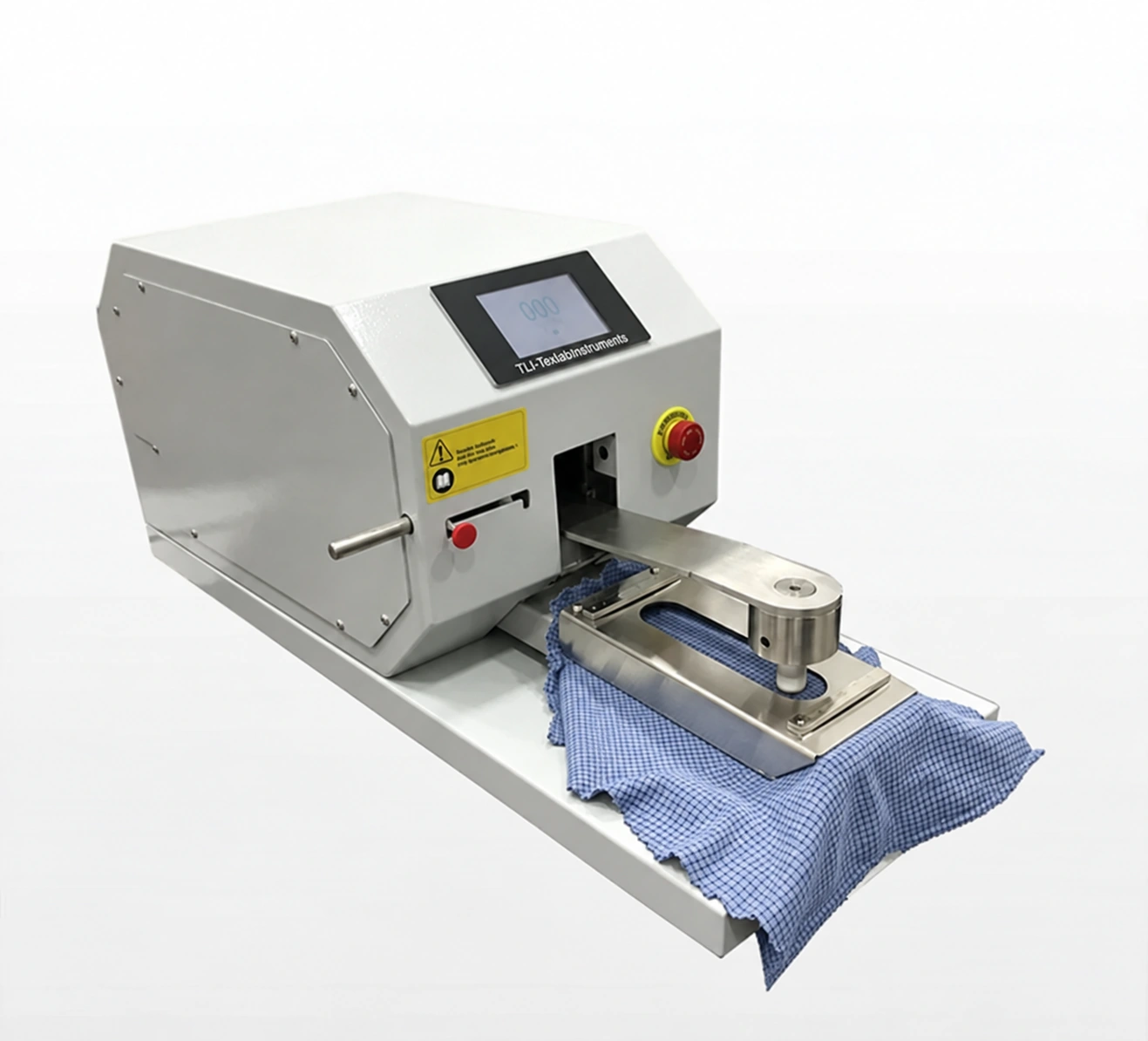
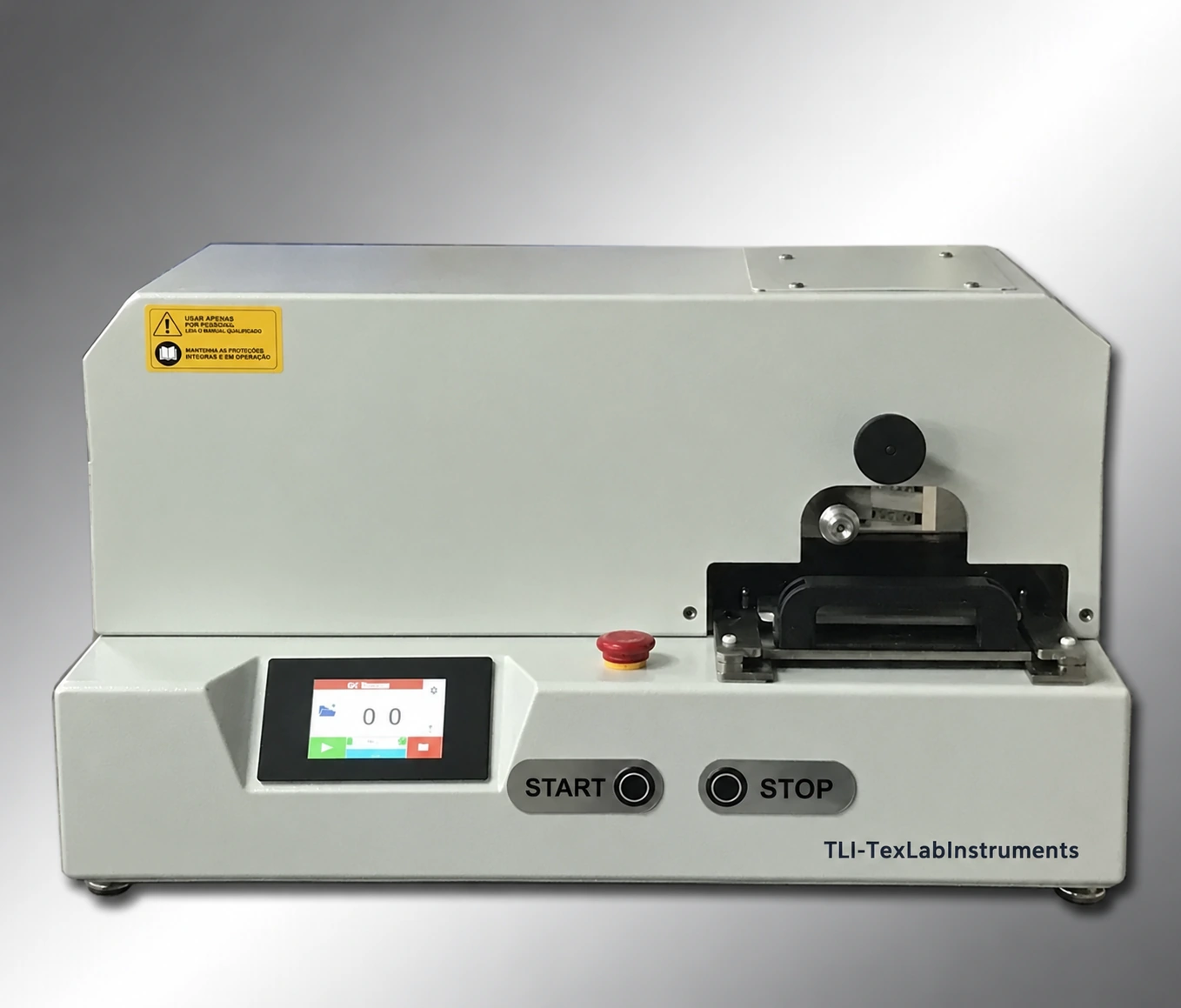
Evaluates the cut resistance of gloves and protective materials with a rotating circular blade. The blade travels back and forth over the specimen and the number of cycles to cut-through is recorded.
Model technical data
- The rotary circular knife moves 50 mm on above the test sample under 5 N pressure.
- The device has a rotating circular blade with a diameter of 45 ± 0.5 mm and a thickness of 3 ± 0.3 mm.
- The force applied by the blade to the fabric is 5 ± 0.05N.
- There is a digital counter on the device that can measure the number of cycles required to disconnect the test sample.
Physical specifications and utilities
| Electrical supply | Approx. 220–240 V AC, 50/60 Hz, single phase; build-dependent. |
|---|---|
| Power / connected load | Approx. 100–300 W connected load for preliminary planning. |
| Overall instrument dimensions | Approx. 650 × 500 × 500 mm (W × D × H). |
| Instrument weight | Approx. 30–60 kg net. |
| Gross / shipping weight | Approx. 58–100 kg gross; estimated packing allowance. |
| Lab requirements | Level, stable working surface; specimen conditioning follows the selected method. |
Dimension order and approximate values are stated in each row. Packaging data are separate from instrument dimensions and net mass. Approx. rows are preliminary engineering estimates based on comparable equipment and function/capacity; they are not verified manufacturing measurements or standard requirements. Installation and shipment are finalised against the approved drawing and nameplate. Estimate scope: base product / one unit; external computer, bench and auxiliary plant excluded.
Specifications, dimensions, and power requirements are approximate and subject to change without prior notice for continuous design improvements.
Product technical specifications and images may vary according to manufacturing conditions and applicable standards.
Test and configuration
- Measured output / function
- Cut resistance index using a rotating blade
- Parameters selected for the method
- Blade, load, reference material and cut detection
- Verification points
- Blade condition, load, stroke and counter
Listed methods are application references. Suitability is established by assessing the selected hardware, current method and calibration together.
Test parameters for the reviewed method
Values belong to the stated source edition. Test recipe, fixture and delivered instrument configuration are selected together.
EN 388:2016 · 6.2.2
- Coupe blade diameter 45 ± 0.5 mm and thickness 0.3 ± 0.03 mm; horizontal travel 50 mm; force 5 ± 0.5 N and cutting speed 8 ± 2 cm/s. This rotary-blade test is distinct from the ISO 13997 TDM method.
Control and recording specification
The following are method-specific software/recording requirements; delivered software modules are defined by the order scope.
- Method code and edition, specimen ID, operator and selected test parameters are linked to the record.
- The calculation and endpoint are defined by the selected method edition; instrument signals and operator assessments are kept distinct.
- Raw measurements, units, valid/invalid test flags and the reported result remain traceable.
- Calculations are checked against known inputs and an independent calculation; sensor channels are checked against calibration values.
Test standards
Prices start from €18. Request the technical specification and a quotation for this instrument.
Request a quoteCall usPDF catalogue