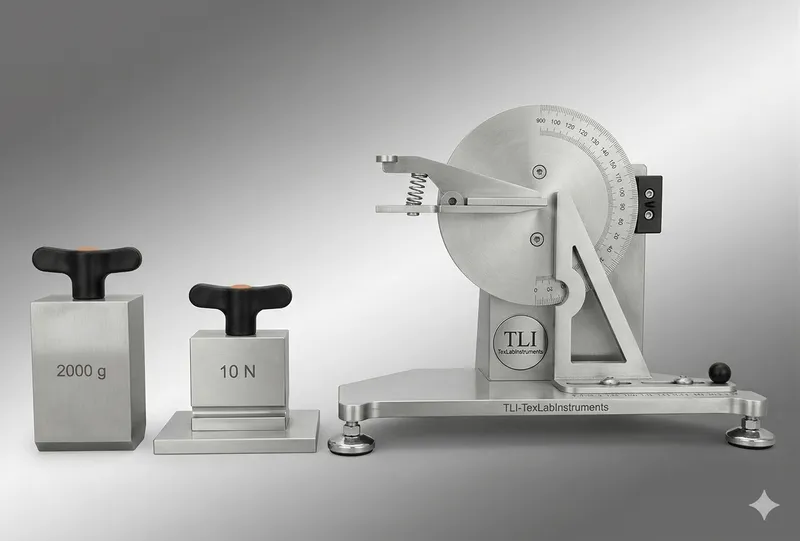
Photographs have been adapted for the website; dimensions may vary.
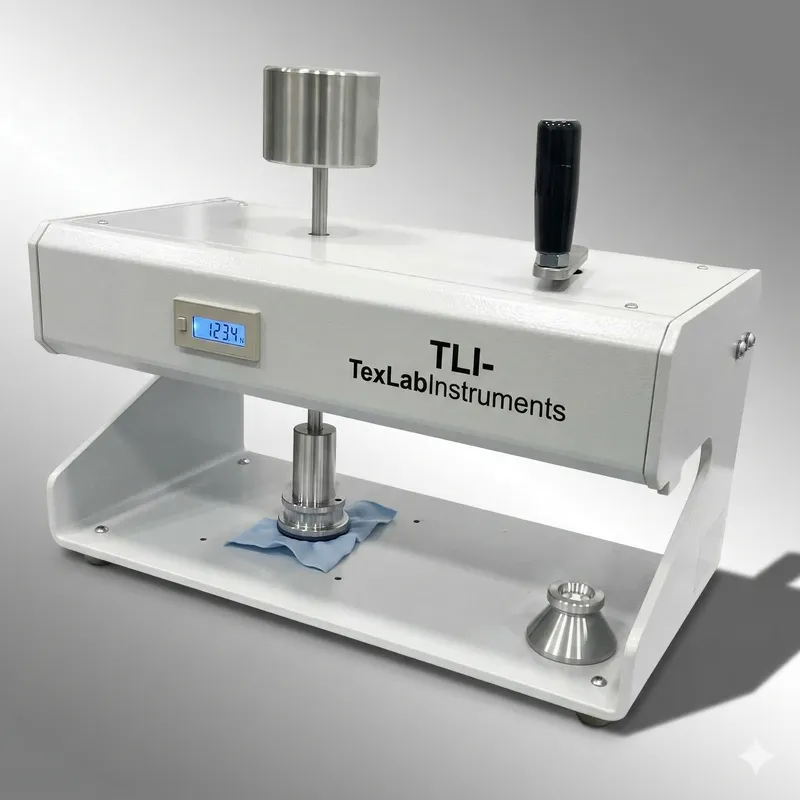
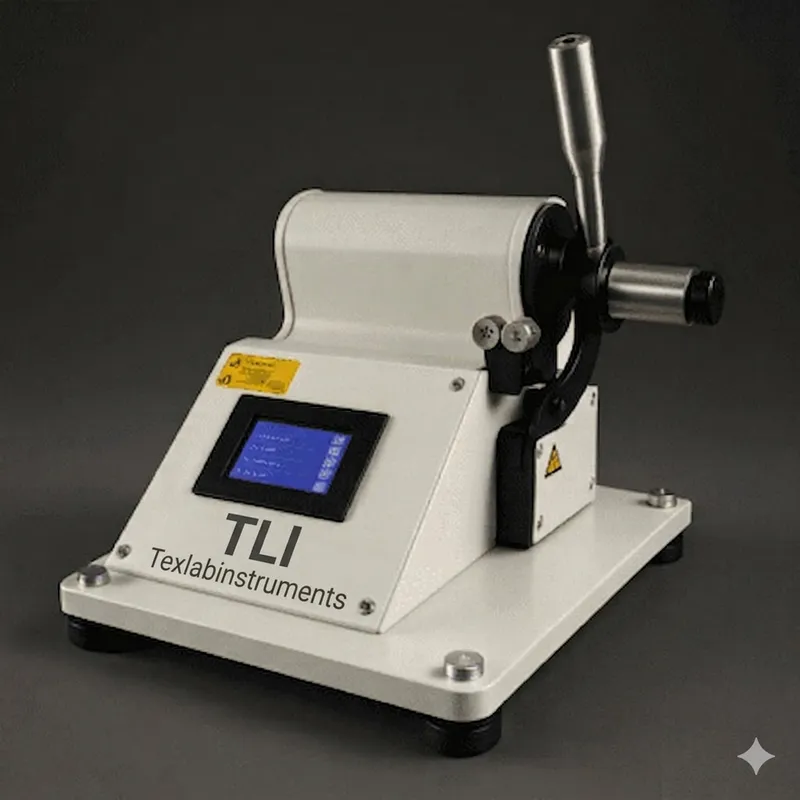
Crease Recovery Tester
Kırışıklık Geri Dönüşüm Açısı Ölçer
Wrinkle recovery angle measurement of fabrics.
Model technical data
- Measures the folding recovery angle of the fabric.
- The angle formed after the pressure applied to the folded fabric is released is measured according to the standards.
Physical specifications and utilities
| Electrical supply | Manual / passive base apparatus; no mains supply assumed. |
|---|---|
| Power / connected load | Approx. 0 W connected load for preliminary planning. |
| Overall instrument dimensions | Approx. 300 × 250 × 400 mm (W × D × H). |
| Instrument weight | Approx. 5–10 kg net. |
| Gross / shipping weight | Approx. 15.5–22.5 kg gross; estimated packing allowance. |
| Lab requirements | Level, stable working surface; specimen conditioning follows the selected method. |
Dimension order and approximate values are stated in each row. Packaging data are separate from instrument dimensions and net mass. Approx. rows are preliminary engineering estimates based on comparable equipment and function/capacity; they are not verified manufacturing measurements or standard requirements. Installation and shipment are finalised against the approved drawing and nameplate. Estimate scope: base product / one unit; external computer, bench and auxiliary plant excluded.
Specifications, dimensions, and power requirements are approximate and subject to change without prior notice for continuous design improvements.
Product technical specifications and images may vary according to manufacturing conditions and applicable standards.
Test and configuration
- Measured output / function
- Crease recovery angle (°)
- Parameters selected for the method
- Fold direction, load, loading time and recovery time
- Verification points
- Angle scale, load and timer
Listed methods are application references. Suitability is established by assessing the selected hardware, current method and calibration together.
Test parameters for the reviewed method
Values belong to the stated source edition. Test recipe, fixture and delivered instrument configuration are selected together.
AATCC 66 (earlier edition) · 6
- For recovery-angle testing: specimen template 40 × 15 mm; mass 500 ± 5 g; timer accuracy ±1 s.
ISO 2313:1972 — historical edition · 5.1–5.3, 7.2, 8.2–8.3
- 1972 edition: total load 10 N over 15 × 15 mm; release in <1 s. Angular scale accuracy ±0.5°, reading 1°. Specimen 40 × 15 mm; loading 5 min ± 5 s, recovery reading 5 min after release. Not automatically equivalent to the 2021 parts.
ISO 2313-1:2021 · 5.1(a); remaining apparatus details pending
- 2021 clause 5.1(a): press load 10.0 ± 0.5 N over 15 × 15 mm of folded specimen; complete unloading <1 s.
Control and recording specification
The following are method-specific software/recording requirements; delivered software modules are defined by the order scope.
- The need for integrated software depends on the method and selected hardware; manual instruments use an external test record.
- Method code and edition, specimen ID, operator and selected test parameters are linked to the record.
- The calculation and endpoint are defined by the selected method edition; instrument signals and operator assessments are kept distinct.
- Raw measurements, units, valid/invalid test flags and the reported result remain traceable.
- Calculations are checked against known inputs and an independent calculation; sensor channels are checked against calibration values.
Historical method references (current method and fixture require separate review): ISO 2313
Download the technical brochure (PDF)Revision: 27 October 2026Test standards
Prices start from €18. Request the technical specification and a quotation for this instrument.
Request a quoteCall usPDF catalogue