Photographs have been adapted for the website; dimensions may vary.
pH Meter
pH Metre
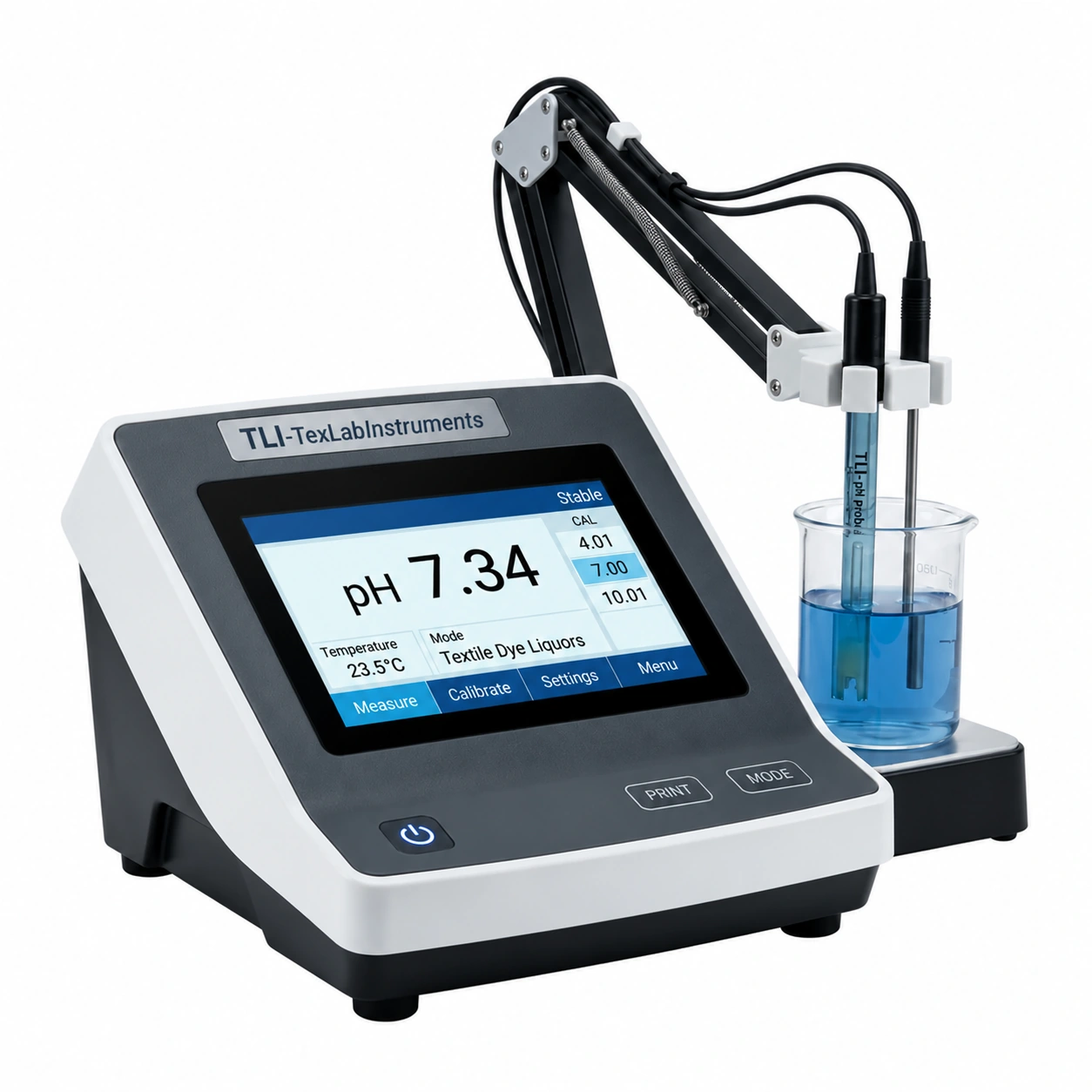
Laboratory precision pH measuring instrument. A functional device that meets the basic needs of every textile laboratory, offering regular and flexible operation capabilities.
Model technical data
- Measurement: pH in liquids; textile testing uses a prepared aqueous extract.
- Model options: pocket, portable or benchtop.
- Electrode selection: glass or epoxy body to suit the application.
- Supplied as a set with calibration solutions.
Physical specifications and utilities
| Electrical supply | Approx. low-voltage adapter with 100–240 V AC, 50/60 Hz input; output voltage is build-dependent. |
|---|---|
| Power / connected load | Approx. 5–20 W connected load for preliminary planning. |
| Overall instrument dimensions | Approx. 250 × 250 × 120 mm (W × D × H). |
| Instrument weight | Approx. 0.8–2 kg net. |
| Gross / shipping weight | Approx. 2.9–4.5 kg gross; estimated packing allowance. |
| Lab requirements | Level, stable working surface; specimen conditioning follows the selected method. |
Dimension order and approximate values are stated in each row. Packaging data are separate from instrument dimensions and net mass. Approx. rows are preliminary engineering estimates based on comparable equipment and function/capacity; they are not verified manufacturing measurements or standard requirements. Installation and shipment are finalised against the approved drawing and nameplate. Estimate scope: base product / one unit; external computer, bench and auxiliary plant excluded.
Specifications, dimensions, and power requirements are approximate and subject to change without prior notice for continuous design improvements.
Product technical specifications and images may vary according to manufacturing conditions and applicable standards.
Test and configuration
- Measured output / function
- pH of an aqueous extract
- Parameters selected for the method
- Electrode type, temperature and extraction procedure
- Verification points
- Calibration using certified buffer solutions
Listed methods are application references. Suitability is established by assessing the selected hardware, current method and calibration together.
Test parameters for the reviewed method
Values belong to the stated source edition. Test recipe, fixture and delivered instrument configuration are selected together.
ISO 3071 (earlier edition) · 6-8
- Reference aqueous extraction uses 2.00 ± 0.05 g and mechanical shaking for 2 h ±5 min. Equivalence of rapid extraction is verified separately.
AATCC 81-2006 · 8.1, 9.1-9.3
- Reference extraction: specimen 10 ± 0.1 g and 250 mL distilled water; boil water for 10 min, then boil a further 10 min after adding the specimen. Rapid pH CORE extraction requires separate equivalence validation.
Control and recording specification
The following are method-specific software/recording requirements; delivered software modules are defined by the order scope.
- Method code and edition, specimen ID, operator and selected test parameters are linked to the record.
- The calculation and endpoint are defined by the selected method edition; instrument signals and operator assessments are kept distinct.
- Raw measurements, units, valid/invalid test flags and the reported result remain traceable.
- Calculations are checked against known inputs and an independent calculation; sensor channels are checked against calibration values.
Test standards
Prices start from €18. Request the technical specification and a quotation for this instrument.
Request a quoteCall usPDF catalogue