Martindale Tester — Abrasion and Pilling
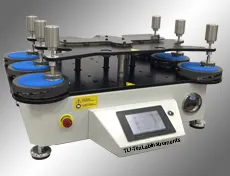
In a Martindale tester the specimen is rubbed against an abradant under a defined load, along a Lissajous path that rubs evenly in every direction. With the abrasion kit the same instrument measures abrasion resistance (ISO 12947); with the pilling kit it measures pilling propensity (ISO 12945-2). We build our Martindale testers in our own workshop in Istanbul.
- Motion: Martindale/Lissajous; abrasion and pilling kits are selected separately.
- Listed Texlab configuration: 8 stations.
- Family options: 4, 6, 8, 9 or 12 test positions; the model is specified in the order.
- Touchscreen control; USB computer interface is standard.
- Method-specific options: cutters, felts, backing foams, abradants and assessment photographs.
What does it measure?
| Standard | Result | Kit |
|---|---|---|
| ISO 12947-1 | The Martindale apparatus itself: motion, loads, holders | — |
| ISO 12947-2 | Cycles until specimen breakdown (end point) | Abrasion |
| ISO 12947-3 | Mass loss after a set number of cycles | Abrasion |
| ISO 12947-4 | Change in appearance | Abrasion |
| ISO 12945-2 | Pilling grade (1–5 against reference photographs) | Pilling |
| ASTM D4966 / ASTM D4970 | US methods: abrasion and pilling | Abrasion / Pilling |
Applications
- Abrasion resistance of apparel and upholstery fabrics
- Pilling control of knitted and woven fabrics
- Protective glove abrasion test (EN 388)
- Leather and coated fabric surfaces (ISO 17076-2, ISO 5470-2)
- Footwear materials (ISO 17704, ISO 20344)
Standards
Product pages
Martindale Abrasion & Pilling Tester
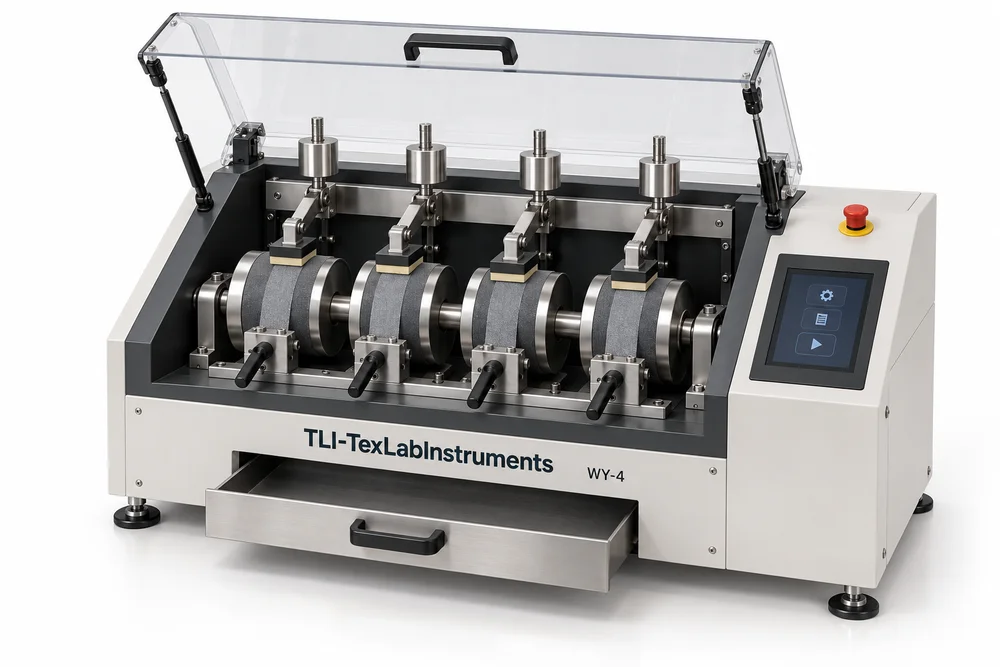
Wyzenbeek Abrasion Tester (WY-4, 4 Cylinders)
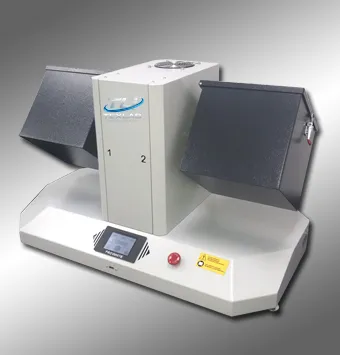
ICI Pilling Box Tester
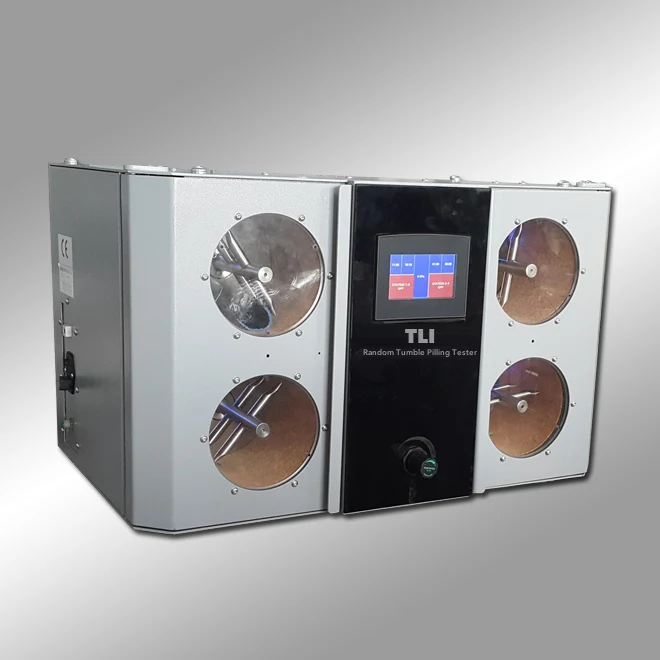
Random Tumble Pilling Tester
Application guides
- ISO 12947 Martindale abrasion: finding the end point
- Common mistakes in the ISO 12945-2 Martindale pilling test
Frequently asked questions
What is the Martindale test?
The fabric specimen is rubbed against an abradant under a defined load along a Lissajous path. The result is reported as cycles to breakdown, mass loss, change in appearance or pilling grade.
Can abrasion and pilling be tested on the same instrument?
Yes. The motion is the same; abrasion and pilling kits are selected separately. The kits required are specified in the order.
How many stations should I choose?
The Martindale family is built with 4, 6, 8, 9 or 12 test positions. The choice depends on your daily sample load; our standard catalogue configuration is 8 stations.
What is the difference between the four parts of ISO 12947?
ISO 12947-1 specifies the apparatus. Part 2 measures cycles to specimen breakdown, part 3 mass loss and part 4 change in appearance. Which part applies is stated in the buyer's test specification.
What is the difference between Martindale and Wyzenbeek?
Martindale applies multi-directional (Lissajous) rubbing and is used in ISO methods. Wyzenbeek (ASTM D4157) rubs in one direction with an oscillating cylinder and is required mainly in US upholstery specifications. The two results cannot be converted into each other; we also build a Wyzenbeek tester.
Do you supply abradant fabric, felt and foam?
Method-specific cutters, felts, backing foams, abradants and assessment photographs are offered as options.
Can the instrument be connected to a computer?
Yes. Touchscreen control and a USB computer interface are standard.
What are the warranty and delivery terms?
A 1-year manufacturer's warranty is given. Delivery is EXW Istanbul with export packing included; freight is quoted separately on request.
Tell us the number of stations and the standards you apply; we will send the technical specification and a quotation.
Request a quoteCall usinfo@texlabinstruments.com